Moisturizers and the Skin Barrier: How to Tell When Yours Is Compromised
Ceramides, humectants, and occlusives do different jobs. Here is how to read a label, spot a damaged barrier, and reset your skin after over-exfoliating.
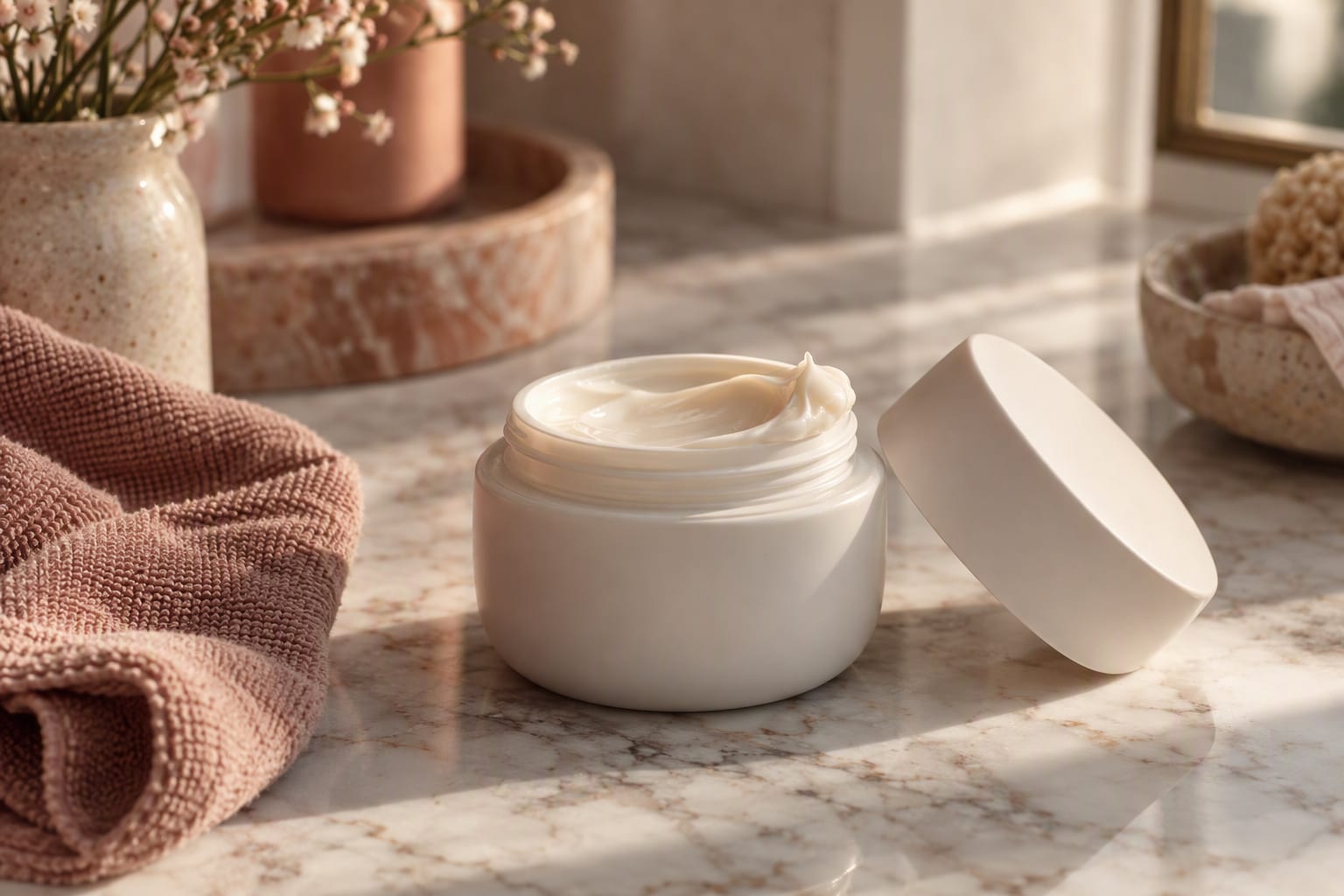
A barrier-repair routine is the fastest fix for stinging, flaky skin, and a plain ceramide cream does most of it; skip the expensive 'barrier' serums if you have not first stopped the actives causing the problem.
It usually starts with a good intention. You added a nightly exfoliating acid, liked the glow, added a second acid in the morning, and somewhere in week three your face began to sting when moisturizer touched it. Now everything burns, including water, and the products that used to feel fine are suddenly unbearable.
That is not a sensitivity you developed overnight. It is a barrier that got stripped faster than it could rebuild. The good news is that it is one of the more fixable situations in skincare, and it does not require an expensive product to solve.
What the barrier actually is
The outermost layer of skin works like a brick wall. The “bricks” are skin cells, and the “mortar” is a mixture of lipids, including ceramides, cholesterol, and fatty acids. Together they keep water inside and irritants outside.
When that mortar is degraded, by too many acids, harsh cleansing, or simply cold dry air, two things happen at once. Water escapes, so skin feels tight and flaky. Irritants get in, so skin stings and looks red. The uncomfortable feeling is the wall doing a worse job, not a new allergy.
Three jobs, three ingredient classes
Most good moisturizers are blends, and the three main classes of ingredients are doing distinct work.
| Class | What it does | Common examples |
|---|---|---|
| Humectants | Pull water into the skin | Glycerin, hyaluronic acid, panthenol |
| Emollients | Smooth and soften, fill gaps between cells | Fatty alcohols, squalane, oils |
| Occlusives | Seal the surface, slow water loss | Petrolatum, dimethicone, shea butter |
A barrier cream usually leans on emollients and occlusives to seal, while a hydrating serum leans on humectants to attract water. They are not competitors. In a compromised barrier, a humectant alone can even pull water from deeper skin if the surface is not sealed on top, which is why a serum without a cream can leave skin feeling drier.
Signs your barrier is compromised
The clues are consistent and easy to recognize once you know them.
- Stinging from products that used to be fine, including plain moisturizer and water.
- Tightness after cleansing that does not ease within a few minutes.
- Flaking or rough patches that appear even with regular moisturizing.
- Redness that lingers, especially on the cheeks.
- A sudden “reaction” to an active you had tolerated for weeks.
If you recognize two or three of these, the barrier is the more likely explanation than a new allergy.
The reset week
The fix is mostly subtraction, which is why it works.
- Stop all actives. No acids, no retinoids, no vitamin C. This is the part people resist, and it is the part that matters most.
- Switch to a gentle, non-foaming cleanser, and consider cleansing with just water in the morning.
- Apply a plain ceramide moisturizer twice a day. A dedicated barrier balm can help at night.
- Add a humectant layer under it if skin feels tight, then seal it with the cream.
- Reintroduce one product at a time, at a low frequency, once skin is comfortable for several days.
Most people notice real improvement within a week, and skin that has settled usually tolerates a simpler routine than it did before. The temptation is to restart everything at once the moment it feels better. Resist that.
How to choose, without overpaying
You are looking for a formula that does the basics well, not one that promises to rebuild your skin overnight.
- Ceramides in the list: they are the lipids the barrier is made of.
- A simple, short ingredient list: fewer actives means fewer things to react to while you heal.
- Fragrance-free: fragrance is a common trigger on compromised skin.
- A texture you will wear: a heavy balm is great at night; a lighter cream is easier by day.
What you do not need to pay for: a “barrier repair” serum at three times the price of a plain ceramide cream that does the same sealing job. In winter, a facial oil can be layered on top of the cream as an extra occlusive step, but it is optional, not essential.
Who should skip this approach
The reset routine is for over-exfoliated, irritated skin. If your skin is persistently red, painful, or reacting for no clear reason, that is a dermatologist’s call, not a moisturizer’s. If you have eczema or rosacea, follow medical advice rather than a blog routine. And if the stinging continues after two weeks of a simplified routine, get it looked at.
Our skincare section covers how to reintroduce actives once the barrier has settled.
The bottom line
Buy one gentle cleanser, one ceramide moisturizer, and optionally one barrier balm, then stop everything else for a week. Check current price, but remember the cheapest part of the fix is the actives you pause. A moisturizer can support the barrier, but only you can stop stripping it.
More in Skincare
View all
Vitamin C Serums: Forms, Packaging, and How to Tell a Good One
Vitamin C is easy to buy badly. How each form behaves, why the bottle matters as much as the formula, and how to spot a serious serum.
The Four-Step Skincare Routine You Will Actually Keep
A routine that fits in ten minutes: the four steps that matter, the order that makes a difference, and the reason most people quit after two weeks.
Retinol for Beginners: How to Start Without Peeling
A realistic first-retinol plan: how often to apply it, how to build up slowly, what pairs well with it, and the combinations that should never share a night.