Vitamin C Serums: Forms, Packaging, and How to Tell a Good One
Vitamin C is easy to buy badly. How each form behaves, why the bottle matters as much as the formula, and how to spot a serious serum.
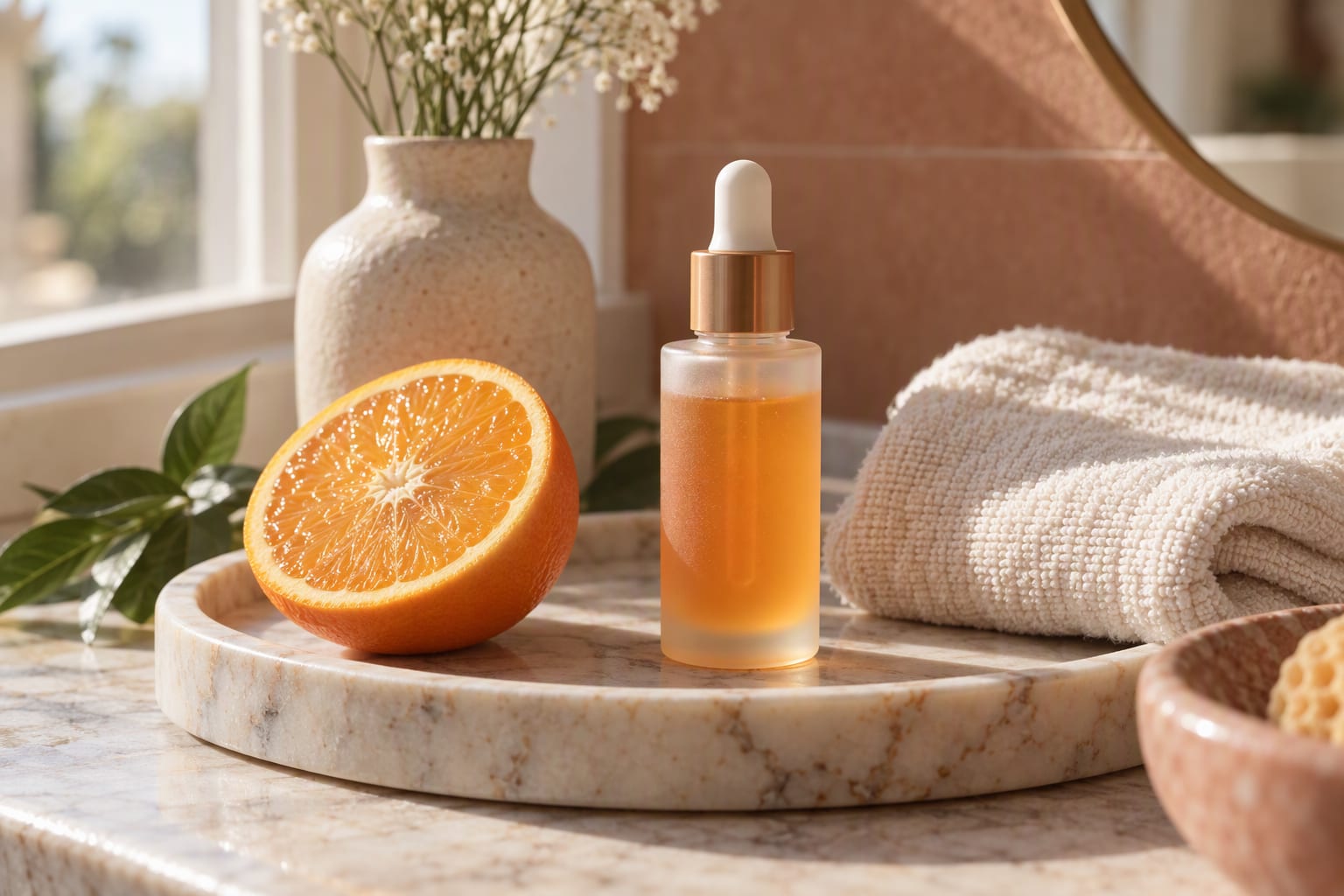
A well-packaged vitamin C serum is worth the money for brightening and antioxidant support; skip it if you will not wear sunscreen, since it cannot outrun daily UV.
Vitamin C is the ingredient people buy with the most confidence and replace with the most frustration. They read that it brightens and defends against environmental stress, they buy a bottle, and three months later the serum has turned the color of iced tea and they are not sure it did anything.
That story is usually not about the ingredient. It is about the form and the packaging. Both decide whether the vitamin C in the bottle is still doing its job by the time it reaches your skin.
Why vitamin C is worth the effort
Vitamin C is an antioxidant. It is studied for its role in supporting collagen production and for helping to even out the appearance of skin tone. In the morning, applied under sunscreen, it is often described as a supporting layer of defense against the oxidative stress that daily light exposure creates.
Two honest caveats. First, most of the stronger studies use concentrations and formulations that do not map neatly onto every consumer product. Second, vitamin C works best as part of a routine that already includes sunscreen. It supports sun protection; it does not replace it.
The forms, and how they behave
Not all vitamin C is the same molecule, and the differences matter for both results and stability.
| Form | What to know | Good for |
|---|---|---|
| L-ascorbic acid | The most studied form; also the least stable | People who want the reference version and will store it carefully |
| Ascorbyl glucoside | A gentler derivative, converts in skin | Sensitive skin, beginners |
| Sodium ascorbyl phosphate | Stable and mild | Acne-prone skin, water-based formulas |
| Tetrahexyldecyl ascorbate | Oil-soluble, more stable | Dry skin, oil-based serums |
| Magnesium ascorbyl phosphate | Mild, water-soluble | Those who react to L-ascorbic acid |
L-ascorbic acid is the form most of the research uses, and it is also the one that oxidizes fastest. That is the central tradeoff of the whole category: the form with the best evidence is the form that spoils soonest. If you want the reference version, you have to protect it.
Packaging decides more than the label
A vitamin C serum that is exposed to light and air will degrade, and a degraded serum is at best useless and at worst irritating.
- Opaque or dark glass: blocks the light that speeds oxidation. Clear glass is a warning sign.
- Airless pump or sealed dropper: limits how much air the formula meets. Wide-mouth jars are the worst possible container.
- A color that has not turned: pale or clear is fine; deep orange or brown means it is oxidizing.
- A realistic size: a large bottle you will not finish before it turns is worse value than a small one you will.
Storing it in a cool, dark place, or a refrigerator, slows the process. This is one of the few cases where a beauty fridge earns its keep, though a cupboard away from the window does the same job for less.
How to tell a good one without testing it
You cannot verify a formula at home, and anyone claiming to have tested dozens is guessing. What you can do is judge the published facts.
- The form is named, not hidden behind “vitamin C complex.” A serious brand tells you which molecule it used.
- The concentration is stated. Common ranges are roughly 10 to 20 percent for L-ascorbic acid. Higher is not automatically better; very high concentrations can be irritating without a clear payoff.
- The packaging protects the formula. If it ships in clear glass with a dropper and no antioxidant support, the form is working against itself.
- It is not a jar. Vitamin C in an open jar is a chemistry experiment, not a product.
What you do not need to pay extra for: a luxury name on the same molecule, or a “booster” you apply on top of an already adequate serum.
Where it goes in a routine
Use vitamin C in the morning, on clean skin, before moisturizer and sunscreen. If it stings, apply it over a thin layer of moisturizer while your skin adjusts, or drop to every other morning. Do not layer it directly with a strong acid, and if you also use retinol, keep the retinol for the evening.
A simple pairing is a gentle cleanser, vitamin C, a light moisturizer, and a sunscreen. Our skincare section covers how to sequence it against other actives.
Who should buy, and who should skip
Buy it if you want antioxidant support and a more even-looking tone, and you will wear sunscreen daily. A mid-priced serum with the right form and packaging will do the job; the price ceiling here is set by branding more than by chemistry.
Skip it if you are not yet consistent with sunscreen, since you would be protecting a routine that is exposed all day anyway. Skip the very cheap clear-bottle options, because the form will have oxidized before you finish it. And if you have persistent pigmentation or a skin condition, see a dermatologist. A serum is not a treatment for a medical concern.
The bottom line
Buy a vitamin C serum in protective packaging, from a brand that names its form and concentration, and treat it as a short-lived fresh product rather than a durable one. Check current price with that shelf life in mind, because a large bottle of a formula that turns in two months is not a bargain. If the ingredient disappoints you, it is more often the packaging than the vitamin C itself.
More in Skincare
View all
The Four-Step Skincare Routine You Will Actually Keep
A routine that fits in ten minutes: the four steps that matter, the order that makes a difference, and the reason most people quit after two weeks.
Moisturizers and the Skin Barrier: How to Tell When Yours Is Compromised
Ceramides, humectants, and occlusives do different jobs. Here is how to read a label, spot a damaged barrier, and reset your skin after over-exfoliating.
Retinol for Beginners: How to Start Without Peeling
A realistic first-retinol plan: how often to apply it, how to build up slowly, what pairs well with it, and the combinations that should never share a night.