AHA vs BHA: Which Exfoliant Actually Fits Your Skin
Glycolic, lactic, and salicylic acids are not interchangeable. Match the acid to the concern, set the right frequency, and spot over-exfoliation early.
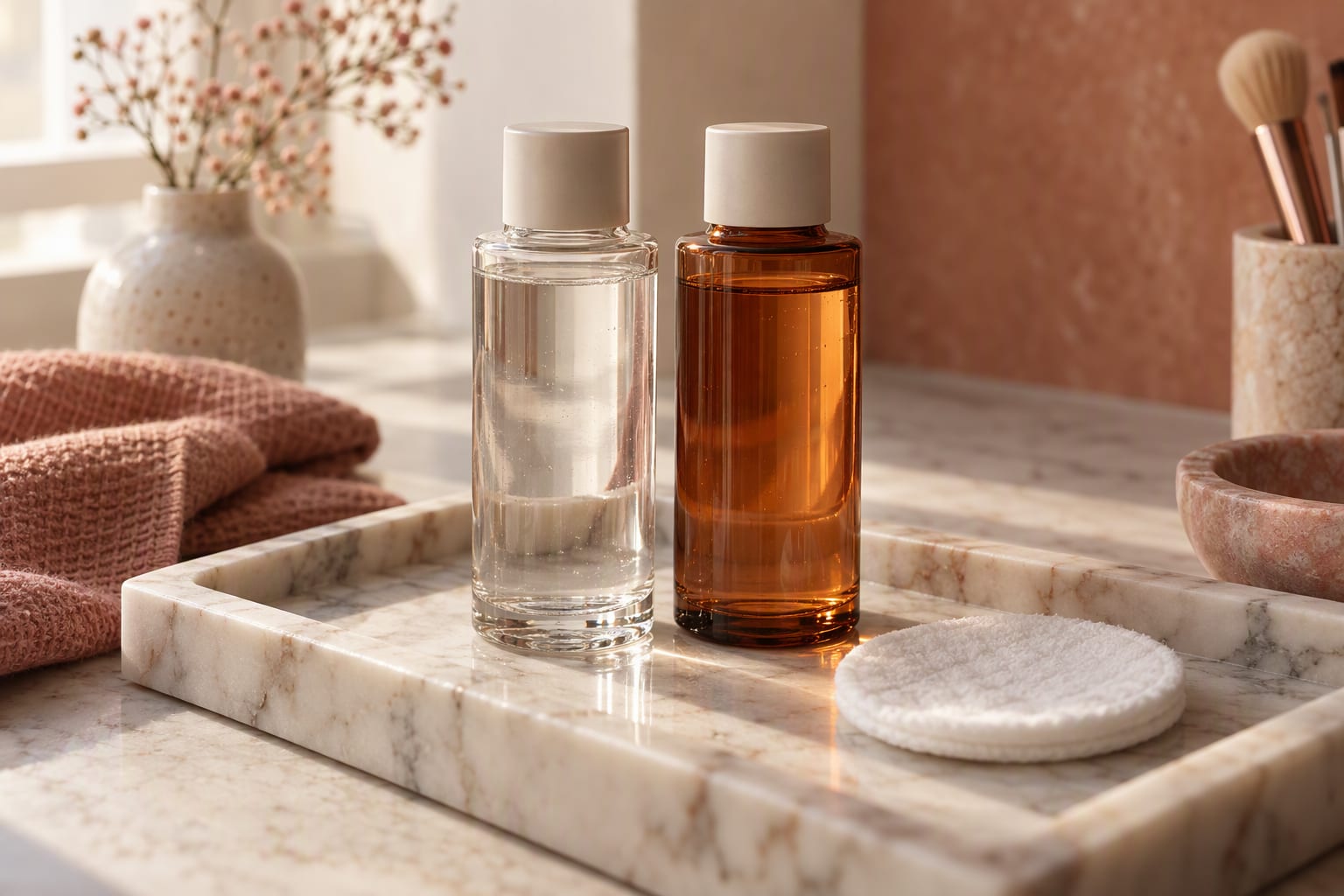
Match the acid to the concern, use it two or three nights a week, and stop at the first sign of stinging; skip daily use if you also use a retinoid, because the two together are a common route to a damaged barrier.
People usually start exfoliating for one of two reasons. Their skin looks dull and needs something to bring the glow back, or their pores are congested with blackheads and they want them gone. Those are different problems, and they call for different acids. Buying the wrong one is why so many people conclude that exfoliating “does not work for them.”
The short version: AHA is for surface dullness and texture, BHA is for oil and clogged pores. Getting that match right matters more than the brand or the price.
How the two acids differ
Both are chemical exfoliants, which means they loosen the bonds holding dead skin cells together rather than scrubbing them off. The difference is where they can work.
| AHA (alpha hydroxy acid) | BHA (beta hydroxy acid) | |
|---|---|---|
| Examples | Glycolic, lactic, mandelic | Salicylic |
| Solubility | Water-soluble | Oil-soluble |
| Works on | Surface of the skin | Inside the pore |
| Best for | Dullness, rough texture, uneven tone | Blackheads, congestion, oily skin |
| Watch out for | Stinging on sensitive skin | Dryness if overused |
The oil solubility of BHA is the key detail. It can travel into a pore, which is why it is the acid associated with congested skin. AHA stays on the surface, which is why it is associated with smoothing and glow.
AHA: for dullness and surface texture
If your main complaint is that skin looks flat, feels rough, or has uneven tone, an AHA is the logical pick. Glycolic is the smallest molecule and tends to be the most potent, which also makes it the most likely to sting. Lactic and mandelic are larger and generally gentler, which makes them better entry points for sensitive skin.
Use an AHA at night, on clean skin, and follow with a moisturizer. Do not layer it directly under a retinoid, and expect a short adjustment period if you are new to acids.
BHA: for congestion and oily skin
If your complaint is blackheads, visible pores, or an oily T-zone that clogs easily, BHA is the better fit. Salicylic acid is the standard form. It suits oily and combination skin and is often better tolerated than an AHA by people whose concern is congestion rather than dullness.
BHA is drying, so pairing it with a ceramide moisturizer matters more than it does with an AHA. If skin starts to feel tight rather than clean, you are using too much.
How often, honestly
The right frequency is lower than most routines suggest.
- Start at two nights a week. Not nightly. Most people get the benefit at this level.
- Build to three or four nights only if skin stays comfortable and you see a reason to.
- Never both AHA and BHA on the same night while you are learning how your skin responds.
- Alternate with retinoids rather than stacking them. One active per evening is the simple rule.
More frequent exfoliation does not speed up results. It mostly speeds up irritation, and irritated skin looks worse than the dullness you started with.
Over-exfoliating: the signs and the fix
Over-exfoliation is the most common self-inflicted skincare problem, and it is easy to recognize once you know the pattern.
- Stinging when you apply products that used to be comfortable
- Redness or a shiny, raw look on the cheeks
- Flaking that does not improve with moisturizer
- Breakouts that appear worse, not better, after adding the acid
If that sounds familiar, stop all exfoliation for one to two weeks, switch to a gentle cleanser and a plain barrier cream, and reintroduce a single acid at a low frequency once skin is calm. Our barrier guide walks through that reset in detail.
One non-negotiable: if you exfoliate, wear sunscreen every morning. Exfoliated skin is more sensitive to UV, and daily exposure will undo the tone improvement you were chasing.
Who should buy, and who should skip
Buy an AHA if you want smoother-looking texture and more even tone, and a BHA if congestion and blackheads are the actual complaint. A mid-priced liquid exfoliant with the right acid does the job; the price ceiling here is set by marketing, not by chemistry.
Skip daily exfoliation entirely if you use a retinoid, if your skin is already reactive, or if you recently had a professional treatment. Skip it too if you are not yet consistent with sunscreen. And if you have persistent acne, that is a dermatologist conversation rather than an exfoliant decision. Chemical exfoliants are not a medical treatment.
The bottom line
Buy the acid that matches your concern, use it two or three nights a week, and pair it with a moisturizer and daily sunscreen. Check current price, but the cheapest upgrade is simply using less. Exfoliation is a tool with a narrow useful range, and the people who see the best results are usually the ones who stopped before their skin had to tell them to.
More in Skincare
View all
Vitamin C Serums: Forms, Packaging, and How to Tell a Good One
Vitamin C is easy to buy badly. How each form behaves, why the bottle matters as much as the formula, and how to spot a serious serum.
The Four-Step Skincare Routine You Will Actually Keep
A routine that fits in ten minutes: the four steps that matter, the order that makes a difference, and the reason most people quit after two weeks.
Moisturizers and the Skin Barrier: How to Tell When Yours Is Compromised
Ceramides, humectants, and occlusives do different jobs. Here is how to read a label, spot a damaged barrier, and reset your skin after over-exfoliating.