Everyday Sunscreen: The One Step That Pays for All the Others
Why daily sunscreen outranks every serum on your shelf, how chemical and mineral filters differ, how much to actually use, and how to reapply without ruining your day.
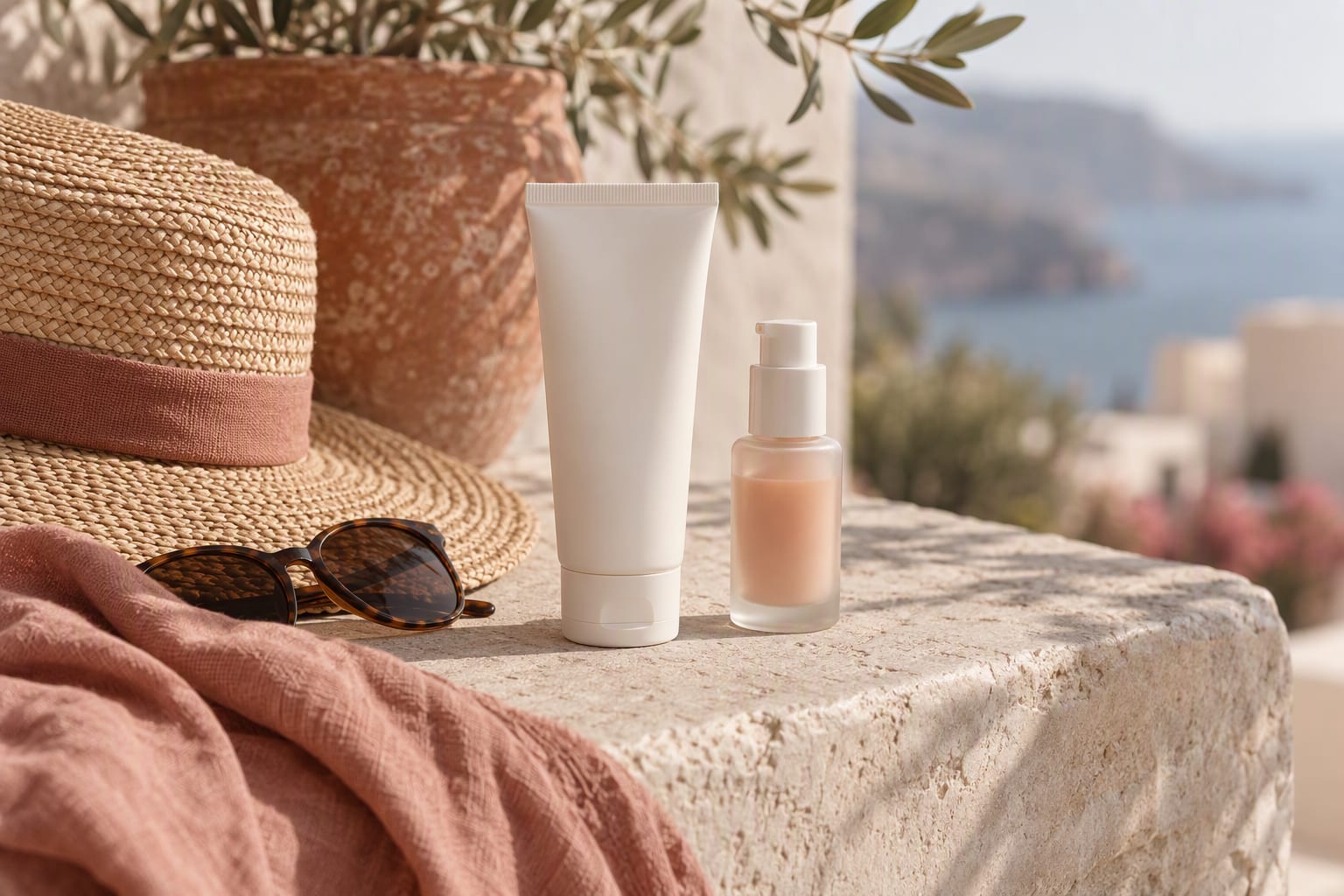
Daily sunscreen is the highest-return step in any routine and the one most people underuse; skip the elaborate formulas if a basic one you will reapply beats a premium one you will not.
If you only ever do one thing for your skin, make it sunscreen. Not because it is glamorous, but because it protects every other result you are chasing. Treating pigmentation without daily sun protection is like mopping a floor while the tap is still running.
The problem is not that people do not know this. It is that sunscreen is the step most likely to be skipped, underapplied, or abandoned because it pilled under makeup. Fixing those three things is the whole game.
Why it is the highest-value step
Daily ultraviolet exposure is associated with the visible signs people spend the most money trying to reverse: uneven tone, dark spots, and the appearance of fine lines. Sunscreen reduces that exposure. In plain terms, it is the step that stops the damage the other steps are trying to repair.
It also protects your actives. Retinol makes skin more sensitive to UV, and vitamin C is an antioxidant that works alongside sun protection rather than replacing it. Without sunscreen, a serious routine is fighting the weather every day and losing slowly.
This is not a medical claim, and sunscreen is not a treatment for any condition. If you have a pigmentation disorder or a history of skin concerns, a dermatologist is the right conversation.
Chemical versus mineral: the real difference
Both types are legitimate. The choice is about texture, skin type, and what you will actually wear.
| Chemical (organic) filters | Mineral (physical) filters | |
|---|---|---|
| How they work | Absorb UV and convert it to heat | Sit on the surface and scatter UV |
| Feel | Often lighter, sinks in quickly | Can feel thicker, may leave a cast |
| Best for | Oily skin, under makeup, daily wear | Sensitive or reactive skin |
| Watch out for | Stinging around the eyes | White cast on deeper skin tones |
The old advice that mineral is “safer” and chemical is “harsher” is too simple. Modern chemical filters are well tolerated by most people, and modern mineral formulas are far less chalky than they used to be. Choose by how it feels on your skin, because the best filter is the one you keep using.
How much to use
Underapplication is the most common reason sunscreen underperforms, even when someone wears it daily.
The commonly cited guidance for the face and neck is about a quarter teaspoon, or roughly the length of two fingers. Most people use a fraction of that, which means their real-world protection is lower than the number on the label.
A few practical notes:
- Do not forget the edges. Ears, hairline, jaw, and neck are frequently missed and are common sites for sun damage.
- Apply before makeup, wait a moment. Let it settle so it does not pill when foundation goes on top.
- A moisturizer with SPF is a starting point, not the finish line. It is hard to apply enough of it to reach the labeled protection.
Reapplication in real life
The ideal is every two hours of sun exposure, and after swimming or heavy sweating. The honest version is that nobody reapplies every two hours on a normal Tuesday, and that is fine.
- Commuting and office days: one careful morning application covers most people indoors. If you sit near a window, a midday top-up helps.
- Long outdoor days: reapply properly, and use a stick or spray over makeup if a cream would ruin it.
- After swimming or sport: reapply every time, no exceptions.
- Winter and overcast days: UV still reaches you, and snow reflects it. Daily use is a year-round habit, not a summer one.
The goal is not perfection. It is consistency, because a daily adequate application beats an occasional perfect one.
Choosing one you will wear
Judge a sunscreen by how likely you are to reach for it tomorrow.
- Texture: if it pills, stings your eyes, or feels greasy, you will stop. Test texture before anything else.
- Cast: mineral formulas vary widely here. Look for tinted options if a white cast is a problem.
- Layering: if you wear makeup daily, pick something that sits well underneath it.
- Size and price: a bigger bottle you use generously beats a small luxury one you ration.
What you do not need to pay a premium for: an SPF far above 50. Higher numbers offer diminishing returns, and the application matters more than the digit. A well-applied SPF 30 will outperform a badly applied SPF 70.
Who should skip, and the honest caveats
There is almost no one who should skip daily sunscreen, but there are people who should choose more carefully. If your skin is reactive, start with a mineral formula and patch test. If you have melasma or another pigmentation condition, treat sunscreen as essential and see a dermatologist for the rest. If you are using prescription retinoids, your dermatologist will likely tell you the same.
Our skincare section covers how sunscreen fits around cleansers and moisturizers without piling up.
The bottom line
Buy a sunscreen you enjoy applying, use enough of it, and reapply when you are actually in the sun. Check current price against how generously you will use it, because value here is measured in daily applications, not in bottle prestige. Everything else in your routine is a supporting actor. This is the lead.


More in Skincare
View all
Vitamin C Serums: Forms, Packaging, and How to Tell a Good One
Vitamin C is easy to buy badly. How each form behaves, why the bottle matters as much as the formula, and how to spot a serious serum.
The Four-Step Skincare Routine You Will Actually Keep
A routine that fits in ten minutes: the four steps that matter, the order that makes a difference, and the reason most people quit after two weeks.
Moisturizers and the Skin Barrier: How to Tell When Yours Is Compromised
Ceramides, humectants, and occlusives do different jobs. Here is how to read a label, spot a damaged barrier, and reset your skin after over-exfoliating.