Fading Dark Spots: What Works, What Wastes Money, and How Long It Takes
Dark spots fade on a schedule set by biology, not by marketing. Here is what the evidence supports, what to skip, and how to build a routine that actually moves the needle.
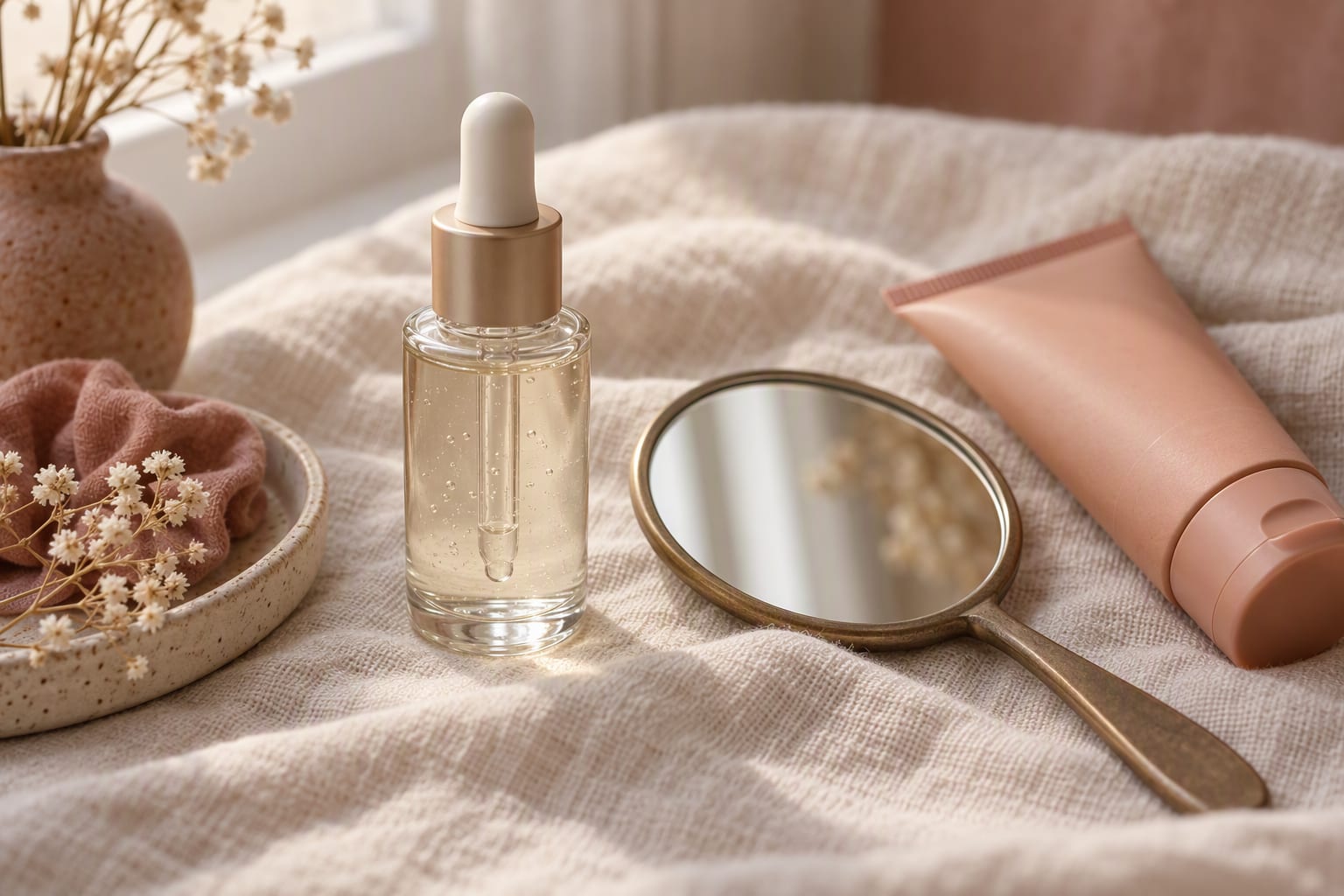
Sunscreen plus one or two evidence-backed actives will fade spots slowly; skip the miracle creams and anything promising fast results, and see a dermatologist if the pigmentation is widespread or changing.
A dark spot is a patient problem. It took weeks or months of sun exposure to form, and it will take weeks or months to fade. That timeline is the single hardest thing to accept, and it is the reason people cycle through one brightening product after another, each abandoned before it had a chance.
The good news is that some ingredients genuinely help. The bad news is that none of them work without the one step people skip.
Sunscreen is not optional here
If you do nothing else for dark spots, wear sunscreen daily. It is the step everything else depends on.
Here is the logic. Dark spots are areas where pigment-producing cells have been triggered, often by UV. Without daily protection, every sunny day re-triggers them, so any fading you achieve is quietly reversed. A brightening serum without sunscreen is a bucket with a hole in it.
This means a broad-spectrum sunscreen, applied generously, every morning, year-round. Mineral or chemical is a personal choice; consistency is not. Reapply when you are actually outside. Our sunscreen guide covers how much to use, because underapplication is the usual reason people think SPF does not work.
What has the best evidence
A small number of ingredients show up repeatedly in the published research on the appearance of pigmentation. None is dramatic on its own. Together, over months, they add up.
| Ingredient | What it is studied for | Realistic expectation |
|---|---|---|
| Sunscreen | Preventing new pigment and protecting fading | The foundation; without it, nothing else holds |
| Retinoids | Accelerating surface turnover | Gradual fading over months, with irritation risk |
| Vitamin C | Antioxidant support, more even tone | Modest brightening; needs protective packaging |
| Tranexamic acid | Targeting the appearance of stubborn pigment | A supporting active; often in combination formulas |
| AHA exfoliants | Surface turnover, smoother tone | Helps surface pigment look more even |
| Niacinamide | Tone support, barrier | Gentle support, not a standalone fix |
The honest summary: retinoids and sunscreen do most of the heavy lifting, vitamin C and niacinamide support the result, and exfoliation helps the surface look more even. Nothing here produces overnight change, and anything claiming to should be treated with suspicion.
Tranexamic acid, and the supporting cast
Tranexamic acid has become a popular addition to brightening serums, and there is research interest in its use for pigmentation. In topical form it usually appears alongside other actives rather than alone. It is a reasonable ingredient to look for in a combination product, but it is not a magic bullet, and stronger forms are a medical matter handled by a dermatologist.
Azelaic acid is another ingredient often discussed for uneven tone, and it is available in both cosmetic and prescription strengths. If your pigmentation is significant, the prescription route is worth a conversation rather than self-experimentation.
What is a waste of money
This is where most spending goes wrong.
- “Instant brightening” masks. Any visible effect is temporary hydration or light reflection, not fading.
- Extremely high-concentration vitamin C. Beyond a sensible range, it irritates more than it helps, and it oxidizes fast.
- Mystery “spot correctors” with no named actives. If the ingredient list hides behind vague terms, there is nothing to evaluate.
- Devices sold as spot removers. Light and heat devices have their uses, but they are not a pigment solution on their own.
- Buying five brightening serums at once. You cannot tell which one helps, and stacked actives often cause the irritation that makes pigmentation look worse.
The pattern is consistent: the expensive options promise speed, and speed is the one thing this category cannot deliver.
A realistic timeline
Fading is measured in months, and progress is easiest to see in photos rather than in the mirror. Take a photo in the same light every few weeks. Expect the first subtle change around the two-to-three month mark with a consistent routine, and meaningful improvement over six months or more. Spots that have been there for years fade slowest.
If you are not seeing any change after three months of daily sunscreen and a consistent active, the issue is usually one of three things: not enough sunscreen, an active used too infrequently to matter, or pigmentation that needs a medical approach.
When to see a dermatologist
Some pigmentation is a medical matter, and self-treatment wastes time.
- Melasma or widespread pigmentation: often needs prescription management.
- A spot that is changing, asymmetric, or irregular: get it checked, do not treat it at home.
- Pigmentation after inflammation, acne, or a procedure: a dermatologist can advise on the right sequence.
- Anything you have treated for months with no change: that is the signal to get help.
Skincare is not a medical treatment. A serum can support a routine, but it cannot diagnose or resolve a pigmentation disorder.
The bottom line
Buy a sunscreen you will wear daily, one retinoid or vitamin C serum, and at most one supporting active, then give it months rather than weeks. Check current price, but remember the biggest return comes from the cheapest, most boring step. Dark spots fade when you stop feeding them and start being consistent, and not before.

More in Skincare
View all
Vitamin C Serums: Forms, Packaging, and How to Tell a Good One
Vitamin C is easy to buy badly. How each form behaves, why the bottle matters as much as the formula, and how to spot a serious serum.
The Four-Step Skincare Routine You Will Actually Keep
A routine that fits in ten minutes: the four steps that matter, the order that makes a difference, and the reason most people quit after two weeks.
Moisturizers and the Skin Barrier: How to Tell When Yours Is Compromised
Ceramides, humectants, and occlusives do different jobs. Here is how to read a label, spot a damaged barrier, and reset your skin after over-exfoliating.