Niacinamide: Why 5% Is Often Better Than 10%
Niacinamide is one of the most useful and most over-concentrated ingredients on the shelf. Here is what it does, who benefits, and why a higher percentage is not a better one.
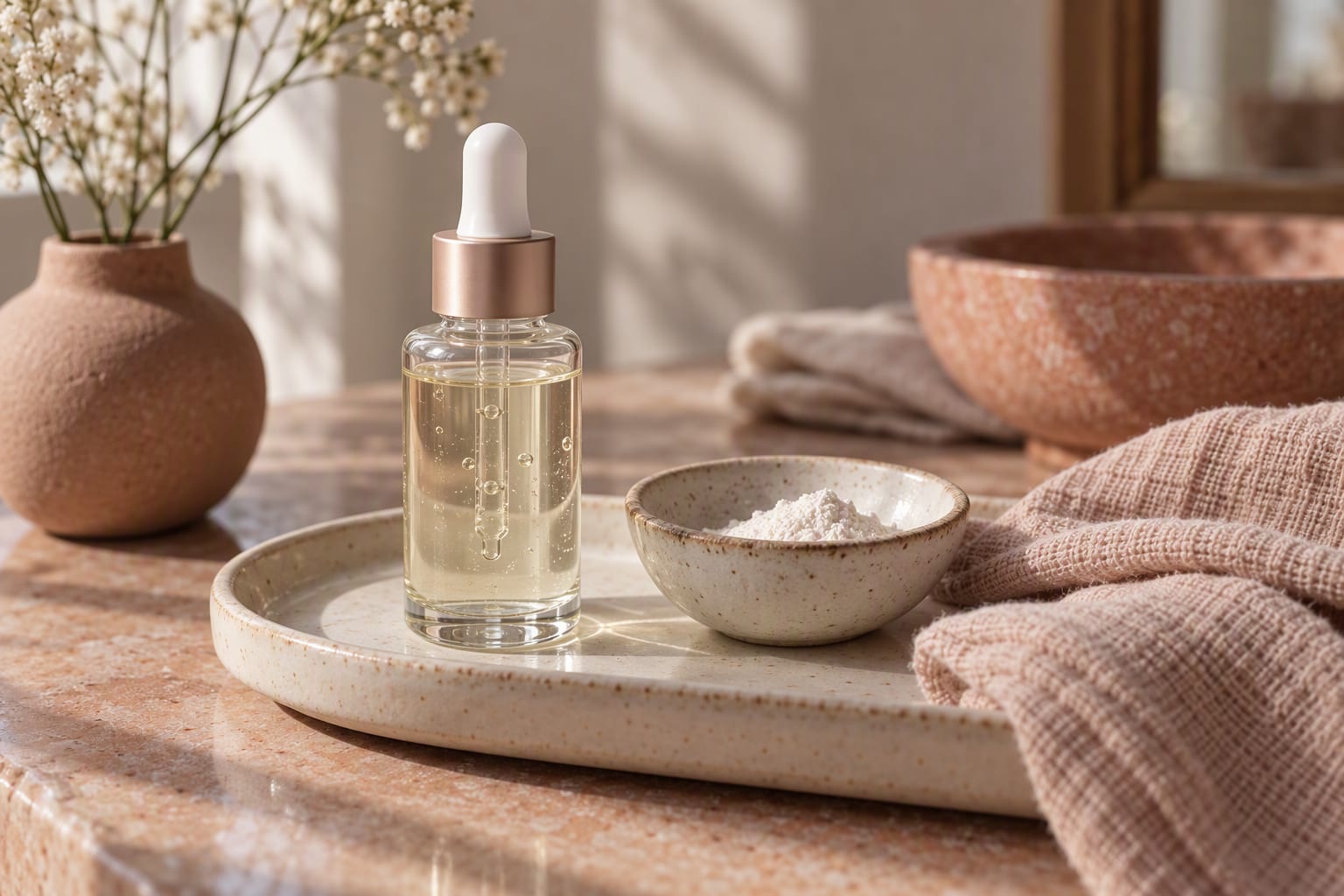
Niacinamide is a genuinely useful multi-tasker at moderate strength; skip the 10% and 20% versions if your skin stings, because more is not better here.
Niacinamide has a reputation problem made entirely by marketing. It is a genuinely useful ingredient, and it has been pushed so hard at ever higher percentages that a lot of people have concluded it does not work. Often what they actually experienced was irritation from a concentration their skin never needed.
The interesting part is that the useful range is lower than the shelf suggests. Five percent is the number worth remembering.
What niacinamide actually does
Niacinamide is a form of vitamin B3. It is studied for a few different jobs, which is why it turns up in so many products.
- Barrier support: it is associated with supporting the skin’s production of ceramides and other barrier components.
- Oil regulation: it is commonly used for skin that looks shiny, and is often cited for helping balance the appearance of oiliness.
- Tone and redness: it is used in routines aimed at more even-looking tone and calmer-looking redness.
- Texture: it appears in products targeting the look of enlarged pores and uneven texture.
That is a broad list, and it is why niacinamide is marketed as a fix for everything. A more honest framing: it is a supportive, well-tolerated ingredient that plays nicely with others. It is not a dramatic single-purpose active like a retinoid.
Why 5% beats 10%
Here is the part the packaging will not tell you. The published research on niacinamide’s benefits frequently uses concentrations in the low single digits, often around 2 to 5 percent. Higher percentages are not supported by proportionally stronger results, and they carry a real risk of irritation.
The reason is simple. Niacinamide is well tolerated at moderate levels, but at high concentrations it can cause flushing, stinging, or a warm sensation, especially on sensitive or compromised skin. A 10 or 20 percent serum is not a stronger version of a 5 percent one. It is a different, riskier experience for most people.
| Concentration | What it is good for | Who should consider it |
|---|---|---|
| 2–5% | Daily support, barrier, tone | Almost everyone, including sensitive skin |
| 5% | The practical sweet spot | Oily or combination skin, daily use |
| 10% | Oil control in tolerant skin | Those who have used 5% with no issue |
| 15–20% | Rarely necessary | Very few; higher irritation risk |
If you want a simple rule: buy the lower percentage first, and only move up if you have a specific reason and no irritation.
Who actually benefits
Niacinamide suits a wide range of people because it is gentle and easy to combine.
- Oily and combination skin: it is a common choice for shine control and the appearance of pores.
- Sensitive skin: at low strength, it is one of the better-tolerated actives.
- Anyone building a routine: it slots in without the ramp-up a retinoid needs.
- Anyone on retinoids or acids: it can be a calm layer alongside them.
People with dry skin can use it too, though it is not a moisturizer and does not replace one. It is a supporting ingredient, not a standalone routine.
What it pairs with, and what to skip
Niacinamide is one of the least fussy actives. It layers with vitamin C, with retinoids, and with moisturizers. The old claim that it cancels out vitamin C is not well supported by the research, and most modern formulas combine them without issue.
A reasonable place in the routine: after cleansing, before moisturizer, morning or night. If your skin is reactive, start every other day and see how it sits.
Skip it, or drop the strength, if:
- It stings or flushes. That is a concentration problem, not a you problem.
- You are chasing dramatic results. Niacinamide is a support act. If your concern is pigmentation or fine lines, the main character is elsewhere.
- You already use several products containing it. It hides in cleansers, moisturizers, and sunscreens, and stacking them can quietly add up.
The honest tradeoff
Niacinamide is cheap to make, which is why it is everywhere, and that is also why it is a good value when bought at the right strength. You do not need to pay a premium for it, and you should be suspicious of a high price attached to a high percentage, since the higher percentage is often the worse choice.
If you have persistent acne, rosacea-like redness, or another skin condition, see a dermatologist rather than self-treating with a serum. Niacinamide can support a routine, but it is not a medical treatment. Our skincare section covers how it fits with cleansers and moisturizers.
The bottom line
Buy a niacinamide serum around 5 percent if you want oil control and general support, use it daily, and do not chase the highest number on the shelf. Check current price against concentration, because a well-formulated 5 percent at a fair price beats a 20 percent that makes your face sting. The best percentage is the one your skin will tolerate every day.
More in Skincare
View all
Vitamin C Serums: Forms, Packaging, and How to Tell a Good One
Vitamin C is easy to buy badly. How each form behaves, why the bottle matters as much as the formula, and how to spot a serious serum.
The Four-Step Skincare Routine You Will Actually Keep
A routine that fits in ten minutes: the four steps that matter, the order that makes a difference, and the reason most people quit after two weeks.
Moisturizers and the Skin Barrier: How to Tell When Yours Is Compromised
Ceramides, humectants, and occlusives do different jobs. Here is how to read a label, spot a damaged barrier, and reset your skin after over-exfoliating.