At-Home IPL Hair Removal: What to Expect and When to Quit
IPL works best on dark hair and light skin, and it takes months of scheduled sessions. Here is the realistic timeline and how to tell whether it suits you.
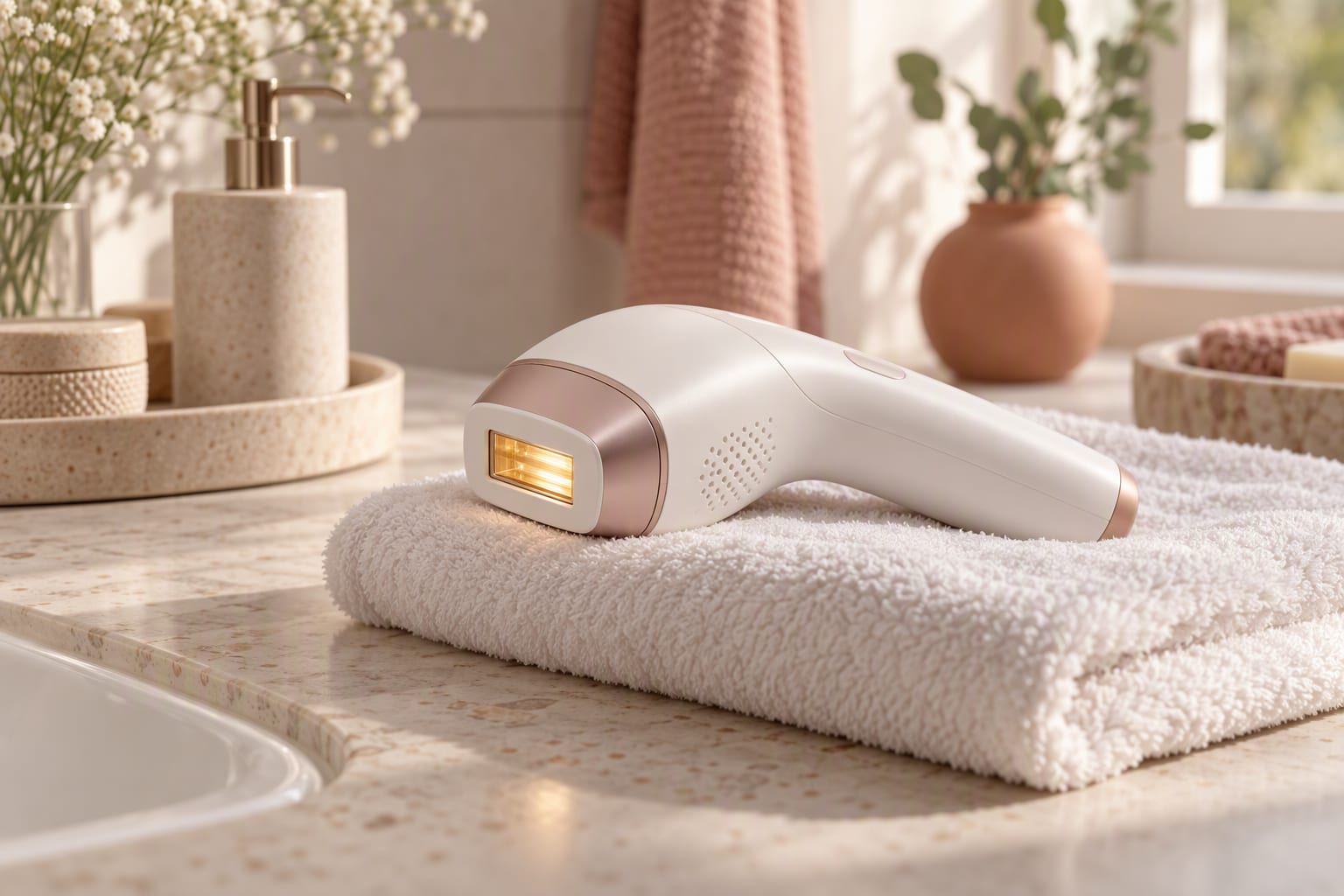
A good fit if you have dark hair on lighter skin and will keep a months-long schedule; skip it for white, gray, or very fine hair, and check with a dermatologist for darker skin tones.
At-home IPL is one of the few device categories where the technology is genuinely effective for the right person, and genuinely useless for the wrong one. The difference is not the brand. It is the contrast between your hair color and your skin tone, and whether you will keep up a schedule that runs for months.
Get those two things right and IPL can meaningfully reduce hair growth over time. Get them wrong and you will spend real money on a device that does almost nothing, and blame yourself for it.
How IPL actually works
IPL stands for intense pulsed light. The device flashes a broad spectrum of light into the skin, and the pigment in the hair absorbs that light energy and converts it into heat. The heat is intended to affect the hair follicle in its growth phase and slow future growth.
Two things follow from that mechanism.
First, the light is attracted to pigment, so it works best where hair is dark and skin is light. The greater the contrast, the more precisely the energy targets the hair and the less it affects the surrounding skin.
Second, hair grows in cycles. At any moment, only a fraction of your hair is in the active growth phase that IPL can affect. That is why a single session does little and why the schedule is the whole game.
IPL is not a medical treatment, and it is not the same as a laser. If you have a hormonal hair condition, or your concern is significant, a dermatologist can advise on options that a home device cannot match.
Skin and hair contrast is the whole game
This is the part that decides whether IPL is worth buying for you.
| Your hair and skin | Realistic expectation |
|---|---|
| Dark hair, light skin | Best-case category; meaningful reduction over time |
| Dark hair, medium skin | Works, with more caution on settings |
| Light brown hair, light skin | Some effect; results vary |
| Blonde, red, or gray hair | Little to no effect; the pigment is not there |
| Very dark skin | Higher risk of burns or pigmentation; consult a dermatologist first |
| Fine, downy hair | Poor target; too little pigment per hair |
If your hair is white, gray, or very light, IPL is simply the wrong tool, and no amount of sessions will change that. If you have darker skin, at-home IPL carries a real risk of burns and pigmentation changes, and the responsible move is to talk to a dermatologist before using one rather than testing it on yourself.
The schedule nobody warns you about
The reason people give up on IPL is almost never the technology. It is the calendar.
The published guidance from manufacturers typically looks something like this:
- Weeks 1 to 4: one session every week or two. Early sessions mainly affect the hair that is in the right growth phase, so regrowth continues.
- Months 2 to 3: sessions continue, and many people start to notice slower regrowth and finer hair in treated areas.
- Months 3 to 6: the period where a real reduction may show, if you have kept the schedule.
- Maintenance: periodic touch-ups, because IPL reduces growth rather than ending it permanently.
That is a lot of sessions, and each one takes real time on legs, underarms, or wherever you are treating. The people who succeed treat it like a standing appointment, not a whenever-I-remember task. If you cannot picture yourself doing it most weeks for several months, the device will end up in a drawer.
What it feels like and aftercare
Most people describe the sensation as a warm snap or a light rubber-band flick. Devices usually offer several intensity levels, and the sensible approach is to start low and increase only if it is comfortable.
After a session:
- Skip sun exposure on treated skin. The skin is more sensitive to light afterward, so cover up or stay out of the sun, and use sunscreen on exposed areas.
- Do not wax, pluck, or epilate between sessions. Those methods remove the hair from the root, which is the opposite of what IPL needs. Shaving is fine.
- Keep the skin calm. A plain, fragrance-free moisturizer is better than a stack of actives, and our skincare section covers gentle post-treatment routines. If the skin feels hot or looks irritated, leave it alone.
- Do not treat the same area twice in one session, and do not treat broken, tanned, or recently sun-exposed skin.
If you develop blistering, lasting redness, or any change in skin color, stop and see a dermatologist.
Who should not use one
- White, gray, or very light hair. The pigment target is missing.
- Very dark skin tones, without a dermatologist’s guidance, because the risk of burns and pigmentation is higher.
- Tanned or sunburnt skin. Wait until the tan fades.
- Pregnant or breastfeeding, unless a doctor says otherwise.
- Anyone with a skin condition in the treatment area, or taking medication that increases light sensitivity.
- Anyone expecting permanent removal. IPL reduces growth; it does not promise it will never return.
The bottom line
Buy an at-home IPL device if you have dark hair on lighter skin and you will genuinely keep a months-long schedule. Expect meaningful reduction, not permanent removal, and expect it to take months. Skip it if your hair is white, gray, or very fine, and talk to a dermatologist first if your skin tone is darker or you have a hormonal concern. The device is only as good as the contrast and the calendar, and you cannot change either with more sessions.




More in Devices & Tools
View all
Microcurrent Devices Explained: What the Current Actually Does
Microcurrent tools promise a lifted look without needles. Here is what the published research suggests, why the results fade, and who should leave them on the shelf.

LED Light Therapy Masks: What They Actually Do (and What They Don't)
Red and blue light masks are everywhere. Here's what the published research supports, what it doesn't, and how to decide whether one deserves a place on your shelf.
How to Choose a Hair Dryer Without Paying for Marketing
Heat and airflow matter more than ion claims and app features. Here is what actually protects hair, what to pay for, and what you can safely ignore.