How to Choose a Hair Dryer Without Paying for Marketing
Heat and airflow matter more than ion claims and app features. Here is what actually protects hair, what to pay for, and what you can safely ignore.
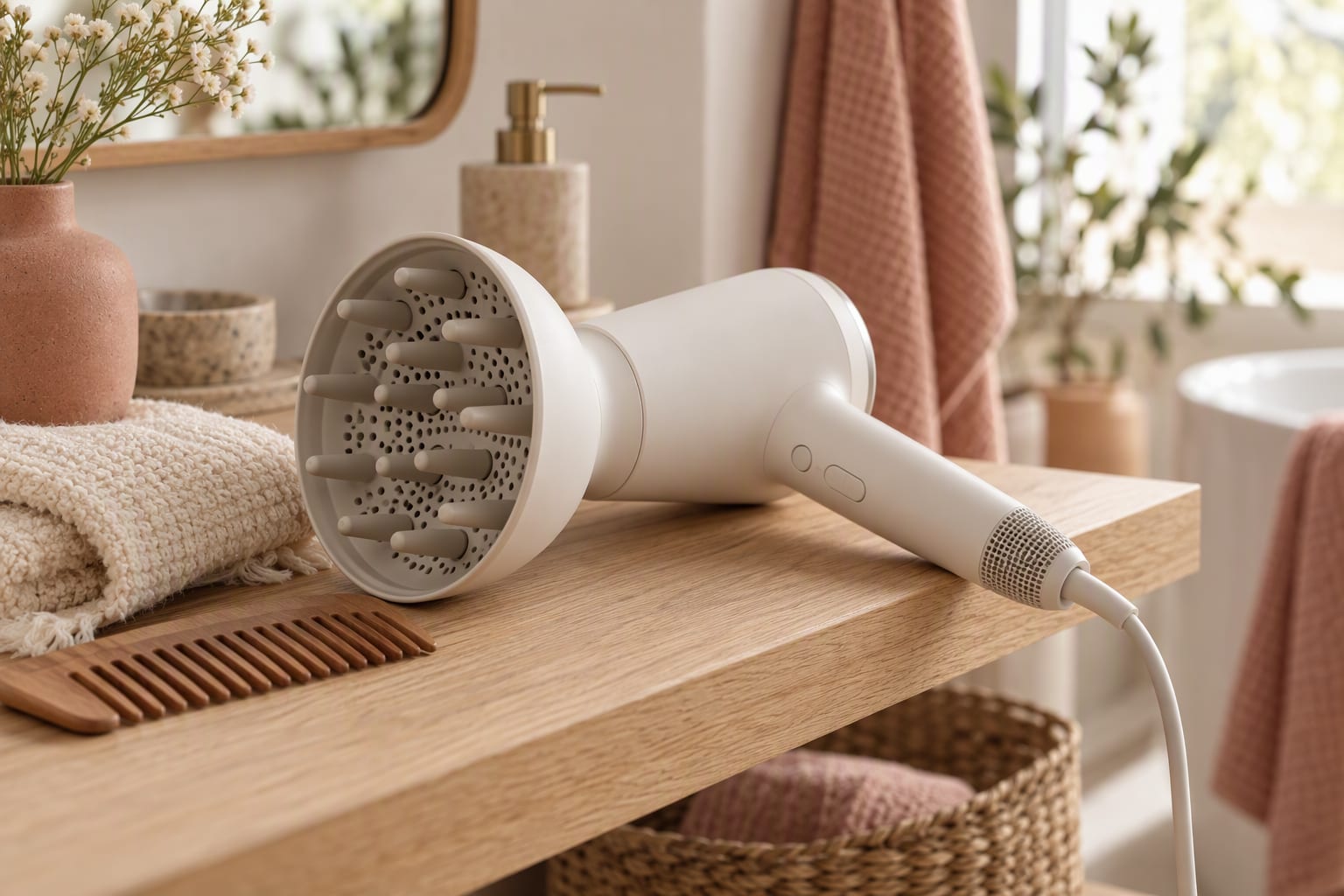
Spend on heat control and airflow, not on ions and app gimmicks; if you mostly air-dry, an inexpensive dryer is genuinely enough.
Walk down the hair-dryer aisle and you will see the same words on almost every box: ionic, ceramic, tourmaline, professional. Very few of them tell you what you actually need to know, which is how hot the air gets, how much air moves, and whether you can control it.
A hair dryer is a simple machine. Heat plus airflow evaporates water. The damage comes from heat, not from the brand. So the buying decision is mostly about control, and a surprising amount of the price difference is about everything except drying hair.
The two things that actually matter
Heat. This is the one that damages hair. Wet hair is more fragile than dry hair, and high heat on wet hair is how you get rough, split ends over time. A dryer that runs cooler, or that lets you set a genuinely cool temperature, is kinder to your hair than one that runs hot and calls it power.
Airflow. Moving air is what dries hair. More airflow means less time under heat, which is a good thing. A strong, well-shaped airflow dries faster at a lower temperature. This is why some expensive dryers feel fast: they move a lot of air, not because the air is hotter.
Everything else is secondary. If a dryer is easy to hold, has a cool-shot button, and lets you choose a lower heat, it can dry your hair well.
What the ion claims really mean
Ionic dryers release negative ions, and the claim is that this reduces frizz and speeds drying by breaking down water droplets. There is some logic to it, and some people genuinely notice smoother results. But the effect is small and depends heavily on your hair type and the humidity around you.
What ions are not is a substitute for heat control. A hot ionic dryer still runs hot. If you had to choose, choose the dryer that lets you dial the heat down, not the one with the loudest ion marketing.
The same caution applies to app connectivity, Bluetooth, and smart features. None of them dry hair better. They add cost and a battery you have to charge.
What to pay for, and what to ignore
| Feature | Worth paying for | Usually not worth it |
|---|---|---|
| Heat settings | Yes, especially a true low and a cool shot | Dozens of preset modes |
| Airflow | Yes, strong and focused | Raw wattage numbers alone |
| Weight and balance | Yes, if you dry often | Heavy professional bulk |
| Ion technology | A small maybe | Premium pricing for ions alone |
| App or Bluetooth | No | Yes, skip |
| Attachments | Concentrator and diffuser | Novelty nozzles you never use |
The most expensive dryers on the shelf are often excellent. The point is not that they are bad. It is that the reason they are good is airflow and heat control, and you can evaluate those without paying the very top of the range.
Protecting hair: the steps that work
The dryer is only half the story. How you use it decides most of the outcome.
- Towel-dry first. Blot with a towel or a soft shirt to remove excess water. Do not rub hard, which causes friction damage.
- Use a heat protectant. This is the step people skip, and it is the one that matters most before any heat. Apply it to damp hair before you pick up the dryer.
- Start on a lower heat, finish on cool. High heat to start, then a cool shot to set the shape, is a common and reasonable approach.
- Keep the dryer moving. Holding it in one spot concentrates heat.
- Keep some distance. Aim the airflow down the hair shaft, not straight into the scalp, and hold the dryer a hand’s width away.
- Stop when it is dry. Continuing past dry is how you cook hair for no reason.
Buying advice: who should spend, who should not
Spend more if: you dry your hair most days, you have fine or fragile hair that shows heat damage quickly, or you have long, thick hair that takes forever. In those cases, faster airflow and better heat control genuinely reduce the time your hair spends under heat.
Spend less if: you air-dry most days and only reach for the dryer occasionally, or your hair is short and forgiving. A mid-range dryer with a real cool shot and a couple of heat settings is enough. There is no law that says you need the flagship.
Consider a styler instead if: what you actually want is to dry and shape at once. A multi-styler that uses air rather than a hot plate is a different purchase from a dryer, and it suits people who want volume and bend more than a straight blow-dry. Our devices and tools hub covers how the categories differ.
The bottom line
Buy a hair dryer for heat control and airflow, and treat ions, apps, and professional labels as extras you can weigh but should not pay a premium for. The best dryer is the one that dries your hair quickly at the lowest heat you can tolerate. Everything else is packaging.
More in Devices & Tools
View all
Microcurrent Devices Explained: What the Current Actually Does
Microcurrent tools promise a lifted look without needles. Here is what the published research suggests, why the results fade, and who should leave them on the shelf.
LED Light Therapy Masks: What They Actually Do (and What They Don't)
Red and blue light masks are everywhere. Here's what the published research supports, what it doesn't, and how to decide whether one deserves a place on your shelf.
Gua Sha and Facial Rollers: Technique Beats the Tool
A jade roller will not build collagen and a gua sha stone will not lift your face. What they do well is de-puff, and technique matters far more than the price.