LED Light Therapy Masks: What They Actually Do (and What They Don't)
Red and blue light masks are everywhere. Here's what the published research supports, what it doesn't, and how to decide whether one deserves a place on your shelf.
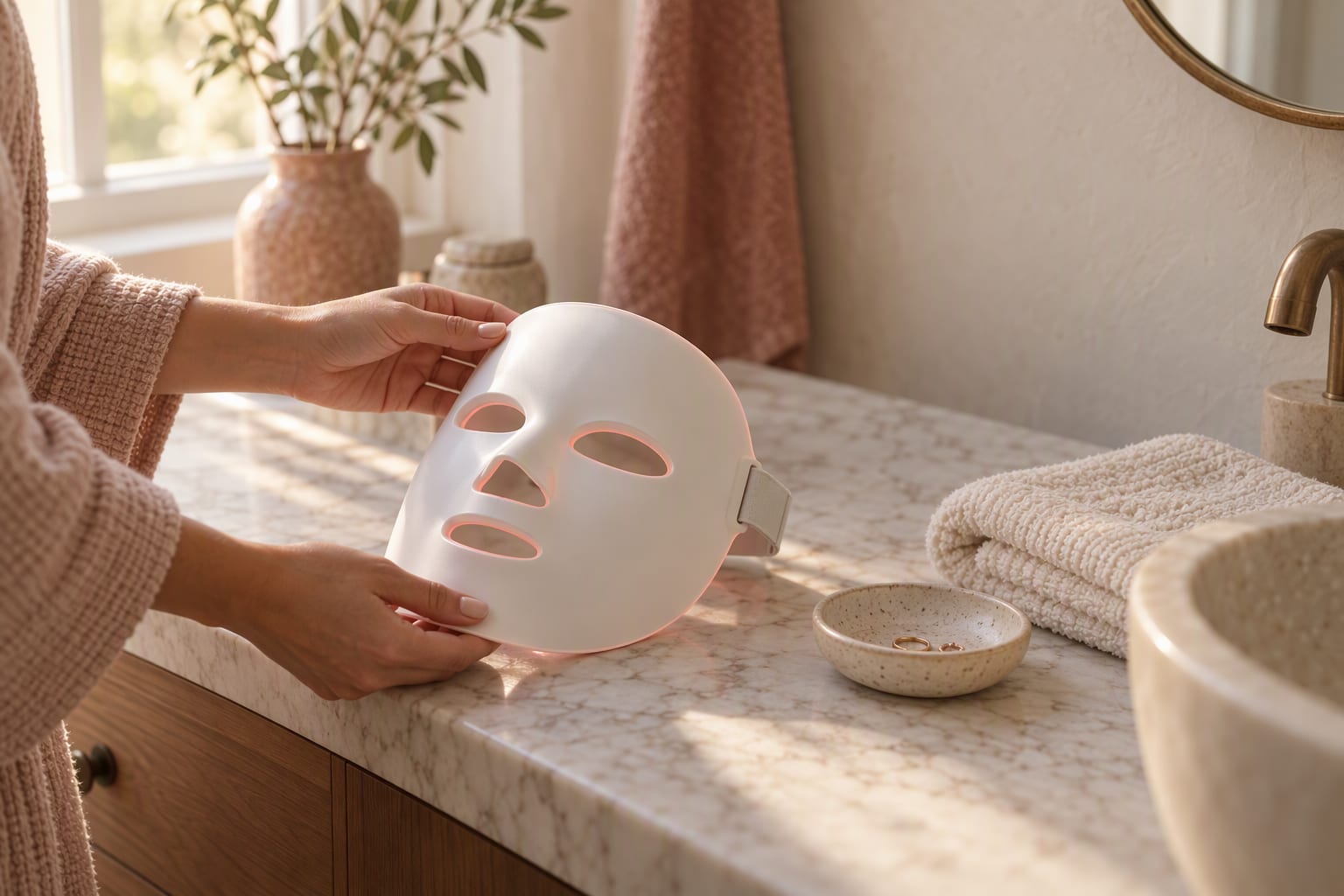
LED masks are the lowest-risk device category you can buy — but only if you commit to the schedule. Skip it if you want overnight results.
An LED mask is the rare beauty device that asks almost nothing of you. You put it on, you sit still for ten to twenty minutes, you take it off. No gel, no technique, no risk of pressing too hard. That low barrier is exactly why they sell so well — and exactly why so many end up in a drawer by month three.
So let’s separate the two questions people actually have. Does the light do anything? And will you still be using it in six months?
What the published research supports
LED masks use light-emitting diodes at specific wavelengths. The two you will see everywhere are red (roughly 630–660nm) and blue (roughly 400–420nm). They are doing different things.
Red light is studied for its effect on fibroblasts — the cells that produce collagen. The proposed mechanism is that the light energy is absorbed by mitochondria and supports cellular energy production, which in turn supports repair processes. The honest summary of the literature is that red light has a modest, real effect on the appearance of fine lines and on wound healing, and the effect is gradual.
Blue light is studied for its effect on Cutibacterium acnes, the bacterium associated with inflammatory acne. Blue light at the right wavelength has a mild antibacterial effect. It is a reasonable adjunct for mild inflammatory acne and a poor substitute for actual acne treatment.
Two things worth saying plainly. First, most of the strongest studies were done with clinical-grade devices and in-office protocols, not consumer masks. Second, “modest and gradual” means weeks to months, not days. Anyone promising overnight change is selling you something other than light.
The real reason LED masks get abandoned
The technology is not the failure point. Adherence is.
A mask only works if you wear it. That sounds obvious, but the practical details decide whether you will:
- Does it stay on your face? A mask that slides down your nose needs a hand to hold it, which means you cannot read, cook, or fold laundry. That is twenty minutes of nothing.
- Is the strap adjustable? Rigid headbands fit some heads and not others.
- Does it need to be plugged in? A cord changes where you can sit.
- How long is the session? Ten minutes is a habit. Thirty is a project.
The masks that get used are the ones that let you do something else while wearing them. If you can wear it through a podcast episode, you will keep the habit.
Red, blue, or both
| Concern | Wavelength that has a rationale | Realistic expectation |
|---|---|---|
| Fine lines, firmness | Red (630–660nm) | Gradual, modest, appearance-level |
| Mild inflammatory acne | Blue (400–420nm) | Mild antibacterial support |
| Post-procedure redness | Red | Supportive, not a treatment |
| Active cystic acne | Neither | See a dermatologist |
A combined red-and-blue mask covers both bases and is a reasonable single purchase. If you have no acne concern, a red-only mask is simpler and usually cheaper.
How to choose without overpaying
Three things separate a good mask from a decorative one.
1. Wavelengths are stated, not implied. A serious brand publishes the exact nanometre figures and the irradiance. “Red light technology” with no numbers is a red flag.
2. The light actually reaches your face. LED masks are not lasers, but the diodes still need to sit close to the skin. A mask that stands off your face on a rigid frame delivers less.
3. It fits. This is the one spec nobody lists and the one that decides everything. Look for adjustable straps and a shape that covers the areas you care about.
What you do not need to pay extra for: app connectivity, colour-changing mood lighting, or a carrying case. Those are not the active ingredient.
Where it fits in a routine
Use your mask on clean, dry skin, before your serum and moisturiser. That is the whole protocol. Light does not need a clear runway the way an acid does, but applying products afterwards means they sit on skin that has just had its circulation gently stimulated.
One caution that matters more than people expect: LED does not replace sunscreen. Red light does not make you photosensitive the way retinoids do, but a bright light device is not sun protection, and if you are treating pigmentation you still need daily SPF or nothing else you do will hold.
If you are already using actives, keep it simple. A gentle cleanser, then the mask, then a hyaluronic serum, then a ceramide moisturiser. Do not stack a mask session on top of a fresh exfoliation night.
Who should skip it
Be honest with yourself on these:
- You want results this month. You will be disappointed and you will blame the device.
- You have active cystic acne. LED is not a substitute for treatment.
- You are on photosensitising medication. Ask your dermatologist first.
- You will not sit still for ten minutes. This is the most common reason. If that is you, a gua sha you use for two minutes is a better purchase.
For everyone else, an LED mask is a low-risk, low-effort addition with a real if modest upside — and unlike most devices, it cannot really go wrong. The only failure mode is not using it.
The bottom line
Buy an LED mask if you will genuinely wear it on a schedule, and expect gradual, appearance-level change. Buy a red-and-blue combined unit if acne is part of the picture. Do not buy one expecting to skip the rest of your routine, and do not buy one because the packaging promised a transformation.
The masks worth looking at first are the ones that publish their wavelengths and fit a real human head. Everything else is a lamp.



More in Devices & Tools
View all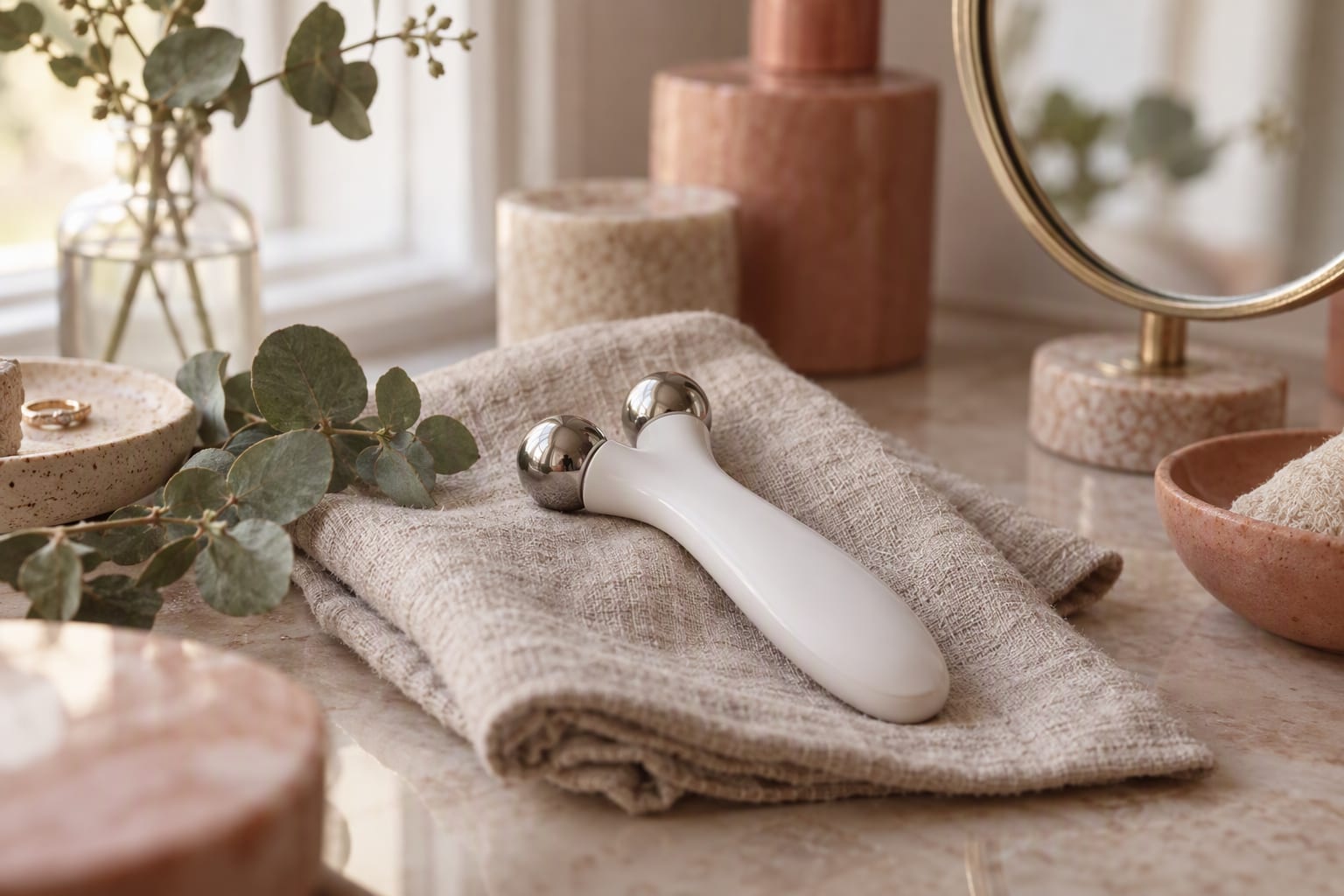
Microcurrent Devices Explained: What the Current Actually Does
Microcurrent tools promise a lifted look without needles. Here is what the published research suggests, why the results fade, and who should leave them on the shelf.
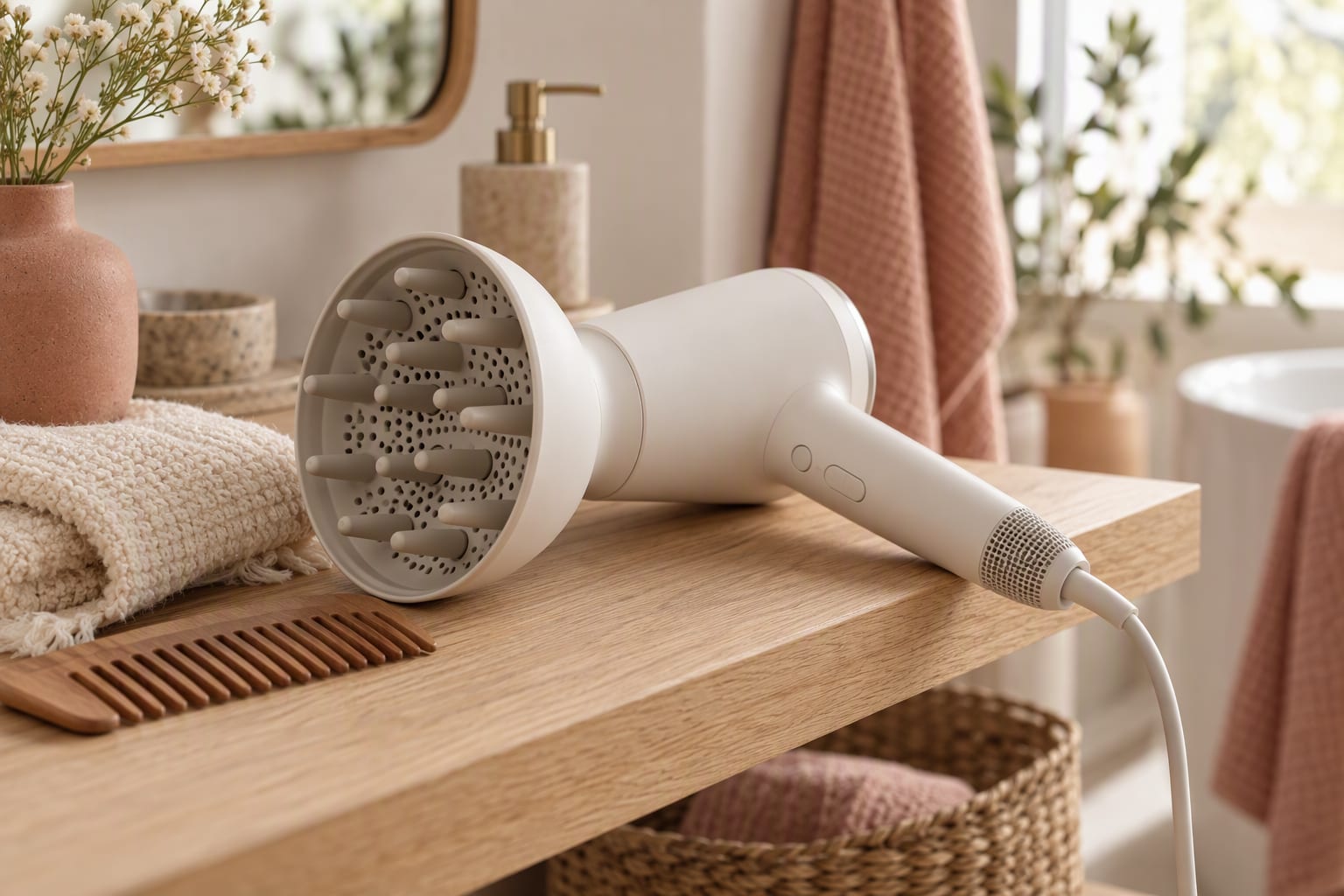
How to Choose a Hair Dryer Without Paying for Marketing
Heat and airflow matter more than ion claims and app features. Here is what actually protects hair, what to pay for, and what you can safely ignore.
Gua Sha and Facial Rollers: Technique Beats the Tool
A jade roller will not build collagen and a gua sha stone will not lift your face. What they do well is de-puff, and technique matters far more than the price.