Microcurrent Devices Explained: What the Current Actually Does
Microcurrent tools promise a lifted look without needles. Here is what the published research suggests, why the results fade, and who should leave them on the shelf.
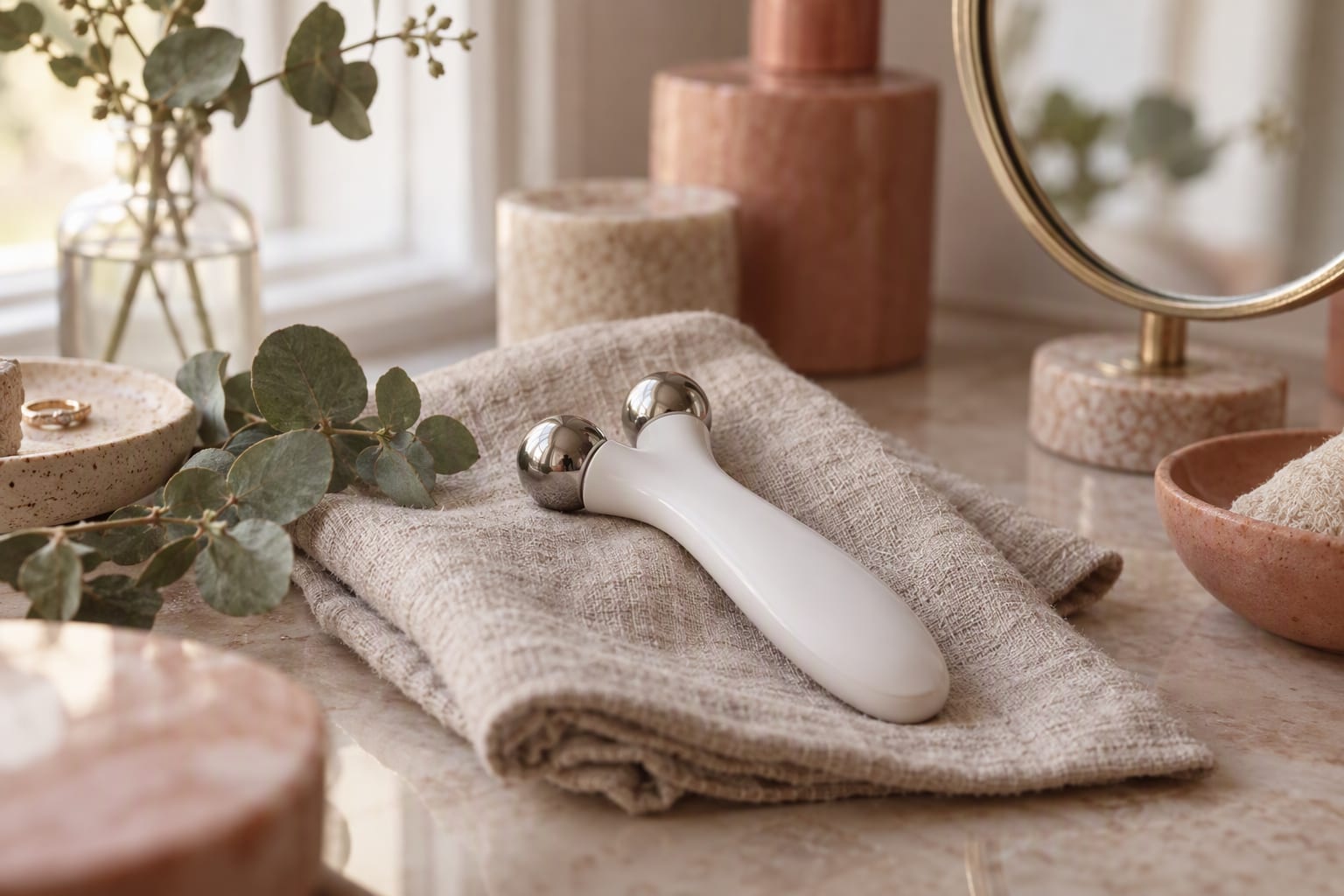
Worth it only if you will use it several times a week for the long haul; the lift is real but temporary, and a skipped week shows.
A microcurrent device is the rare beauty tool that appears to deliver something you can see in the mirror straight away. You glide the metal heads up your jawline, and the outline of your face looks a little sharper. That immediate feedback is why these devices sell so well, and it is also why so many of them end up unused by month four. The change you see is temporary, and the habit that sustains it is the hard part.
This guide covers what microcurrent actually does, how the timeline really works, and how to tell honestly whether you are the kind of person who will keep using it.
What microcurrent is doing
Microcurrent devices pass a very low-level electrical current through the skin using two contact points. The current is measured in microamps, a small fraction of what a professional treatment or a TENS unit uses.
The proposed mechanism is both muscular and cellular. The current is thought to stimulate the facial muscles and to support adenosine triphosphate (ATP) production, the energy cells use for repair. The idea is that gently exercising the muscles while supporting cell energy produces a subtly firmer, more lifted look.
What the published research suggests is modest. Small studies have reported improvements in facial appearance, but those studies are typically small, short, and often run or funded by device makers. The honest expectation is a soft, appearance-level change rather than a structural one.
Crucially, microcurrent is not a medical treatment. It does not reshape bone, it does not remove fat, and it does not stand in for a procedure. If you want a lasting change in the shape of your face, this is not the tool, and a dermatologist is the right conversation.
Why the results fade
Here is the part that decides whether microcurrent is worth your money.
The lift you see right after a session is largely a short-term effect. The muscles have been stimulated and the tissue looks tighter for a while. It fades, often within a day or two. To hold the look, the published protocols and manufacturer guidance point to regular use, frequently several sessions a week.
So the honest framing is not “buy a device, get a lift.” It is “buy a device, adopt a routine.” A microcurrent tool is closer to a gym membership for your face than a one-off purchase. If you will not do the sessions, it will live in a drawer.
The consistency problem, in real life
Think about the last time you were getting ready for work with ten minutes to spare. That is the moment a microcurrent routine has to survive.
- It needs clean skin and a conductive gel or serum. You cannot glide it over a dry face, so the session has to slot in where your skin is already wet and product is on it.
- It takes time. A full face is not a thirty-second job. Budget the sessions honestly.
- The gel matters more than the device. A generous layer of a water-based serum or the brand’s own conductive gel is what lets the current move. If the head drags, you need more slip.
- The device needs cleaning. Metal heads that sit in gel need wiping after every use.
If any of those points makes you sigh, that is useful information. It tells you the device will feel like a chore.
Before an event versus as a routine
There are two legitimate ways to use microcurrent, and they are not the same purchase.
| How you plan to use it | Realistic payoff | Who it suits |
|---|---|---|
| A session before a wedding or photos | A short-lived, subtle lift for the day | People who accept that it fades |
| Several sessions a week, ongoing | A maintained, modest appearance change | People with a locked-in habit |
| Occasional, whenever you remember | Very little | Almost nobody |
If you only want the first, be honest that it is a one-day effect. If you want the second, treat the device as a routine commitment and decide before you buy whether you will actually keep it.
Where it fits with your skincare
Microcurrent is easy to layer because it needs a wet surface anyway. A workable order is a gentle cleanse, then a hydrating serum or the conductive gel, then the device, then a ceramide moisturizer to seal it in, then sunscreen in the morning.
Do not run microcurrent over active breakouts, over broken skin, or over an area treated recently with a cosmetic procedure, unless you clear it with the professional who treated you. If you have a pacemaker, another implanted electronic device, epilepsy, or you are pregnant, this is a category to discuss with a doctor rather than a device to buy on impulse.
Who should skip it
- You want a permanent change. Microcurrent is temporary by design.
- You will not use it several times a week. The device cannot do the work for you.
- You have a medical concern about your skin or face. See a dermatologist, not a device.
- You have a pacemaker or a similar implant. Ask a doctor first.
- You want a low-effort first device. An LED mask asks far less of you; see our devices and tools hub for the lower-effort options.
The bottom line
Buy a microcurrent device if you accept that the lift is temporary and you are willing to keep up a regular schedule. Do not buy one expecting a lasting change, and do not buy one as an occasional treat. The device is only as good as the routine around it.


More in Devices & Tools
View all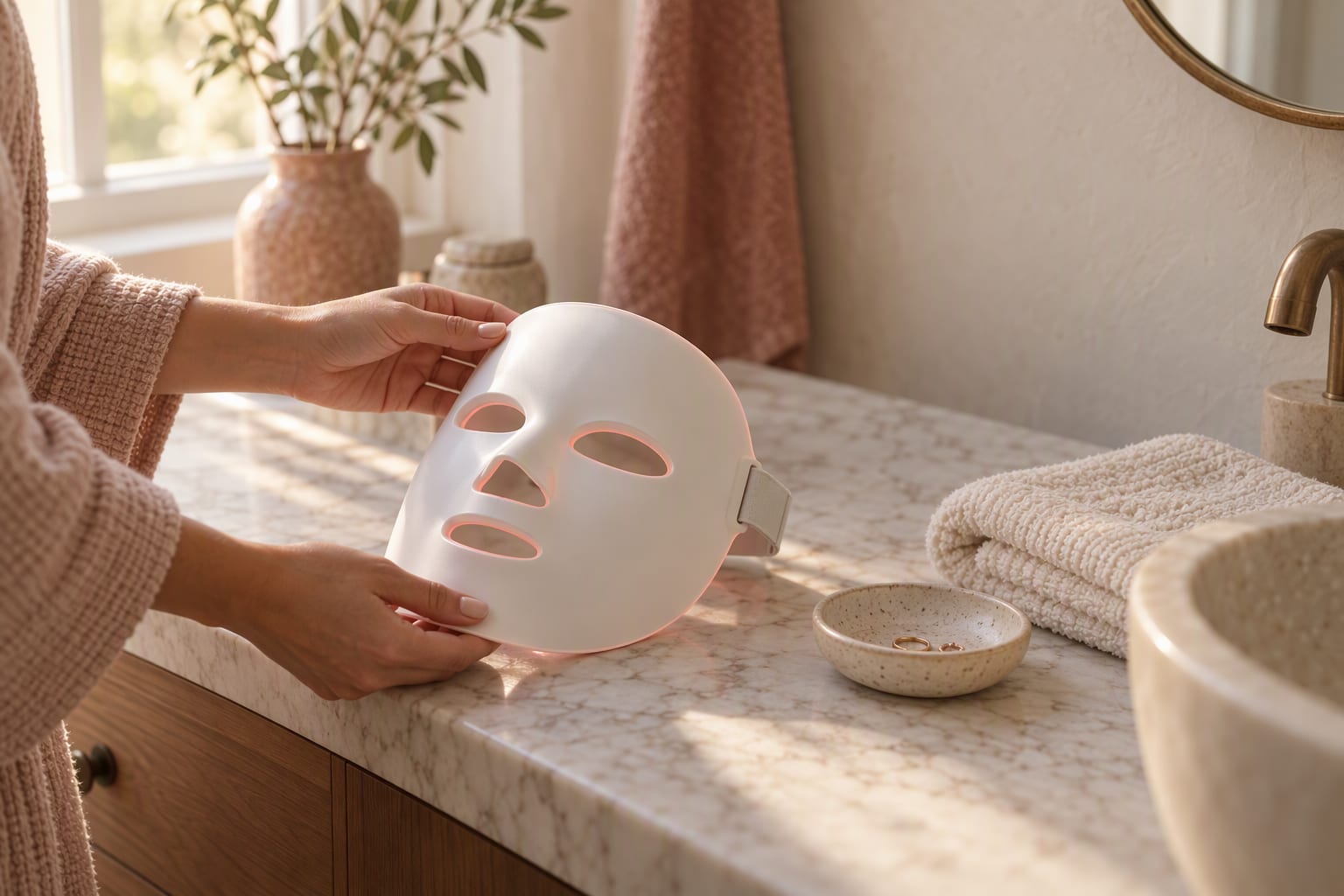
LED Light Therapy Masks: What They Actually Do (and What They Don't)
Red and blue light masks are everywhere. Here's what the published research supports, what it doesn't, and how to decide whether one deserves a place on your shelf.
How to Choose a Hair Dryer Without Paying for Marketing
Heat and airflow matter more than ion claims and app features. Here is what actually protects hair, what to pay for, and what you can safely ignore.

Gua Sha and Facial Rollers: Technique Beats the Tool
A jade roller will not build collagen and a gua sha stone will not lift your face. What they do well is de-puff, and technique matters far more than the price.