Body Tools and Massage Devices: What They Help With and What They Do Not
Percussion guns, rollers, and body gua sha are not the same as facial devices. Here is what they realistically do, and how they differ from tools made for the face.
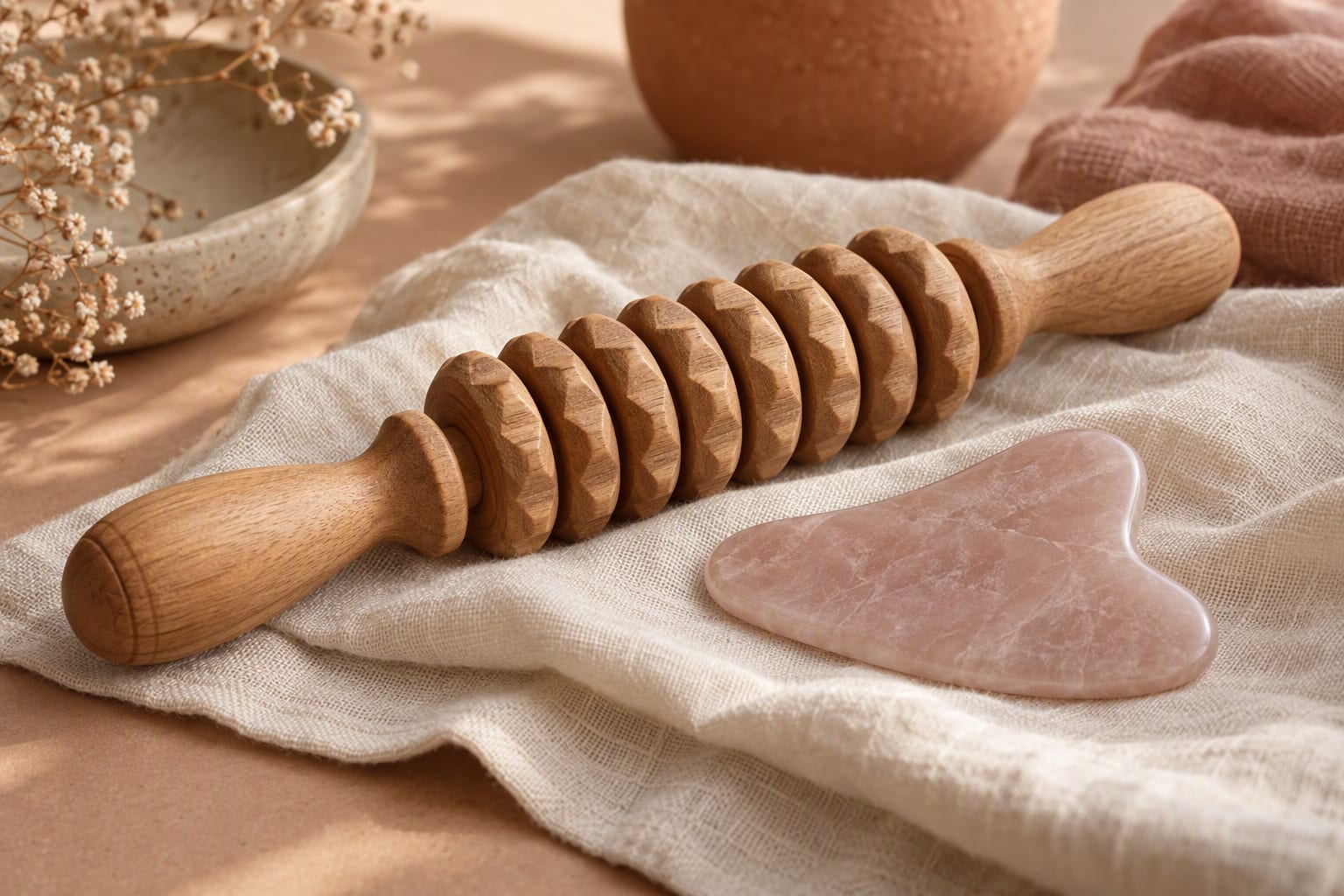
Body tools are for muscle comfort and relaxation, not for fat loss or firming, so buy one only if you will actually use it for tension and recovery.
Walk through any wellness aisle and you will find a growing shelf of gadgets for the body: percussion guns, vibrating rollers, sculpting tools, and heated massagers. They are marketed with a lot of energy and a lot of claims, some reasonable and some not.
Body tools can genuinely help with muscle tension, soreness, and relaxation. They cannot do some of the things the packaging implies. Sorting the two apart is the difference between a useful purchase and an expensive drawer ornament.
What body tools actually do
At their core, most body tools deliver one of a few sensations: percussion, meaning rapid tapping; vibration; pressure, as with a roller or sculpting tool; or temperature, as with a cold or heated device.
Those sensations can produce a few real effects:
- Temporary relief from muscle tightness. Massage can help a tight muscle feel looser and more comfortable.
- A sense of relaxation. The mechanical action and the ritual itself are calming for many people.
- Warmth and circulation. Rubbing and pressing an area increases blood flow to the surface, which can feel pleasant.
- Temporary smoothing of the appearance of skin. A roller or cold tool can reduce puffiness for a short time.
What almost all of them have in common is that the effects are temporary and about comfort, not about changing the structure of your body.
What they do not do
- They do not remove fat. No amount of rolling or vibrating changes fat tissue in a lasting way. Fat loss comes from overall energy balance, not from a device.
- They do not permanently firm or reshape skin. Any smoothing you see is temporary and largely about fluid movement.
- They do not build muscle. That comes from resistance training and enough protein.
- They are not a treatment for an injury. If you have a specific injury or pain that is not resolving, that is a medical matter.
A massage gun can help you feel better after a long day or a workout. It will not, on its own, change your body composition.
How body tools differ from facial devices
Facial devices are designed for thinner, more delicate tissue and for very different goals. Body tools are built for larger muscle groups and tougher skin. Using one where the other belongs is a common and avoidable mistake.
| Feature | Body tools | Facial devices |
|---|---|---|
| Target tissue | Muscle, larger areas | Thin facial skin, small muscles |
| Typical intensity | Higher force | Lower, gentler settings |
| Common goals | Tension relief, relaxation | Puffiness, lymphatic feel, absorption |
| Best used for | Back, legs, shoulders, arms | Face, jaw, neck |
| Risk if misused | Bruising, nerve irritation | Irritation, broken capillaries |
The practical rule: do not take a high-powered body tool to your face. A percussion gun designed for a thigh can bruise delicate facial skin or irritate nerves.
The main types, and who each suits
- Percussion massage tool. Rapid tapping for muscle knots and post-workout tightness. Suits people who train and get sore, or who carry tension in the shoulders and back.
- Body roller or vibrating roller. A broad, easy way to work over larger areas like the legs and back. Suits anyone who wants a simple, low-effort option.
- Sculpting or gua sha-style body tool. A flat edge for pressing and gliding, often used with oil or lotion. Suits people who enjoy a slower, more deliberate routine.
- Ice roller or cold tool. Chilling the skin, often used on the face or after a long day on your feet. Suits anyone prone to puffiness or heat.
Using them safely
A few rules keep a body tool helpful rather than harmful.
- Start on the lowest setting. You can always go up, and it is harder to undo a bruise.
- Avoid bones, joints, the front of the neck, and the spine itself. Work on muscle, not on bony areas or the throat.
- Keep it moving. Holding a percussion tool in one spot can bruise or irritate.
- Stop if it hurts. Discomfort that sharpens rather than eases is a signal to stop, not push through.
- Skip it on injured, inflamed, or swollen areas. See a doctor for anything that does not settle.
- Use a body lotion or oil as a glide with rollers and sculpting tools to reduce drag on the skin.
If you have a circulatory condition, a bleeding disorder, nerve pain, or are pregnant, check with a clinician before using these devices, since some conditions make vigorous massage inadvisable.
Buying advice: who should spend, who should skip
Worth buying: a single tool that matches your actual need. If you get sore from training, a percussion tool earns its place. If you want a calm evening routine, a roller or ice tool is enough.
Skip it if: you are buying for fat loss, firming, or body reshaping. Those are not what these tools do, and the tradeoff is money spent on a promise that will not be kept.
Do not overpay for: app connectivity, dozens of attachments you will never swap in, or “professional-grade” claims for home use. Pay for build quality, a comfortable grip, and a range of settings you will actually use. For context on how these fit with skin and body care, see our Hair & Body hub.
The bottom line
Body tools are for muscle comfort, relaxation, and temporary smoothing, and they are good at those things. They are not fat-loss devices or muscle builders, and they are not facial tools. Buy one for tension and recovery, use it gently, and skip anything sold on a reshaping promise.
Products mentioned
- Massage tool — for post-workout tightness and everyday muscle tension.
- Ice roller — for cooling and de-puffing, especially after a long day.
- Body lotion — a glide product for rollers and sculpting tools, and a daily moisturizer.
More in Hair & Body
View all
Scalp Care: Treat It Like Skin, Because That Is Exactly What It Is
Flakes and itching are scalp problems, not hair problems. Here is what a sensible scalp routine looks like, and when hair loss needs a doctor rather than a serum.
How to Wash Your Hair Properly, and Why Frequency Matters More Than Shampoo
Washing less often is a decision based on your scalp, not a trend. Here is how often to wash by hair type, why scalp and ends differ, and the mistakes that cause frizz.
Hair Styling Tools: How Hot Is Too Hot, and How Many Passes Is Too Many
Heat damage builds up quietly, not in one session. Here is what temperature ranges are gentler, how many passes hair can take, and what a heat protectant really does.