Hair Styling Tools: How Hot Is Too Hot, and How Many Passes Is Too Many
Heat damage builds up quietly, not in one session. Here is what temperature ranges are gentler, how many passes hair can take, and what a heat protectant really does.
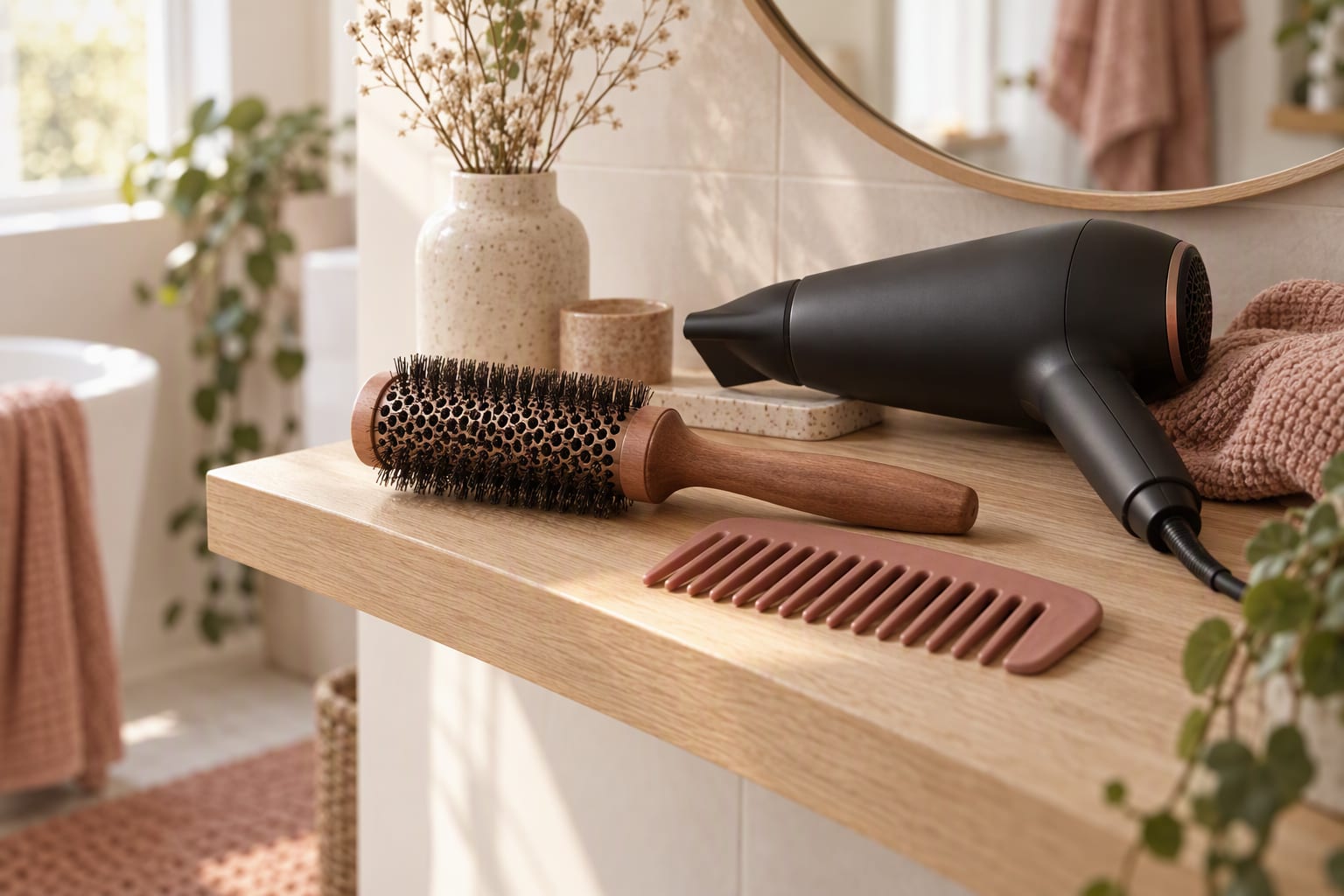
Choose the lowest temperature that styles your hair in one or two passes and treat the top of the dial as a limit, not a default.
Most heat damage does not happen in one dramatic session. It builds quietly: a flat iron set too high, three passes instead of one, a rushed blow-dry on a Monday morning when you are already late. By the time the ends look rough, the damage has been accumulating for months.
Heat styling does not have to wreck your hair. What separates hair that survives years of styling from hair that frays is mostly temperature, the number of passes, and whether you prepare the hair first.
Why heat damages hair at all
Hair is mostly protein arranged in bundles, wrapped in an outer layer of overlapping scales called the cuticle.
When hair gets wet, the bonds inside it loosen, which is why wet hair can be stretched and reshaped. Heat styling works the same way: it temporarily breaks and reforms bonds so the hair holds a new shape. That is also why hair is fragile while it is wet and while it is hot.
Repeated high heat can lift the cuticle scales, leaving the surface rough and prone to tangling. At high enough temperatures, it damages the protein inside the cortex, which cannot be repaired once it is gone. Cuticle damage can be managed. Cortex damage is permanent, so the goal is to stay in the first category.
What temperature is actually safe
There is no single safe number, because it depends on hair thickness and condition. Fine hair has less mass to absorb heat and scorches faster. Coarse hair can take more before it shows damage. What most manufacturers and published guidance suggest is a range, not a setting to always max out.
| Hair type | Gentler working range | Notes |
|---|---|---|
| Fine, lightened, or fragile | 250-300°F (120-150°C) | Start at the bottom |
| Medium, healthy | 300-350°F (150-175°C) | Enough for most styling |
| Coarse, dense, resistant | 350-400°F (175-205°C) | Rarely need the top |
| Very damaged or over-processed | Avoid direct heat | Focus on recovery |
The tradeoff is simple: lower heat can mean more passes for the same result, and more passes is its own damage. Find the lowest temperature that lets you style in one or two passes. Many irons advertise maximums above 400°F. Those numbers sell tools; they are not an instruction to use them.
How many passes is too many
A pass is one smooth glide of the tool down a section of hair.
- One to two passes at a sensible temperature is normal styling.
- Three or more passes on the same section usually means the heat is too low, the section too thick, or the tool too slow.
- Going over damp hair with a flat iron is a common mistake. Hair should be completely dry first, because trapped water turns to steam, and steam is hard on the cuticle.
If you have to go over the same piece four times, split it thinner and try again at the same heat.
What a heat protectant really does
A heat protectant is a leave-in spray, cream, or serum that forms a light coating on the hair. It helps distribute heat more evenly and reduces friction from the tool.
What it can do:
- Reduce friction between the hot plate and the hair, lowering mechanical damage.
- Help heat move through the hair more evenly, avoiding hot spots.
- Add a little conditioning so the hair combs more easily.
What it cannot do is make any temperature safe. It does not let you ignore the dial or stack up extra passes. Think of it as a seatbelt, not an invisibility cloak. Apply it to damp hair and let the hair dry before direct heat.
Tool by tool: where the risk sits
| Tool | Main risk | Gentler approach |
|---|---|---|
| Blow dryer | Sustained heat on wet hair | Towel-dry first, medium heat, keep moving |
| Flat iron | Direct contact, repeated passes | Dry hair only, one to two passes |
| Curling wand | High heat held on one section | Larger sections, wrap and release |
| Air styler | Heat plus tension | Lower heat, let the air work |
An air styler that shapes with warm air and tension is generally gentler than a hot plate, because it never presses a heated surface against the hair. Our Hair & Body hub covers how these tools fit into a wider routine.
Buying advice: who should spend, who should skip
Spend more if: you style with heat several times a week, you have fine or color-treated hair, or you have long hair that needs a fast, consistent result. Precise temperature control and even heating are worth paying for.
Spend less if: you style occasionally and mostly air-dry. A basic tool with a real low setting is enough.
Skip entirely if: your hair is already snapping. No tool will fix that. Stop the heat, use a weekly mask, and let the damage grow out. Our guide to repairing damaged hair covers what can and cannot be undone.
Do not overpay for app connectivity or preset modes you will never use.
The bottom line
Heat damage is a numbers game: lower temperature, fewer passes, dry hair, and a protectant every time. Choose the lowest setting that styles your hair in one or two passes, and treat the top of the dial as a limit rather than a default.
Products mentioned
- Heat protectant — the step before any hot tool touches your hair.
- Hair mask — a weekly moisture top-up for ends that feel rough.
- Flat iron — for anyone who straightens regularly and needs precise temperature control.

More in Hair & Body
View all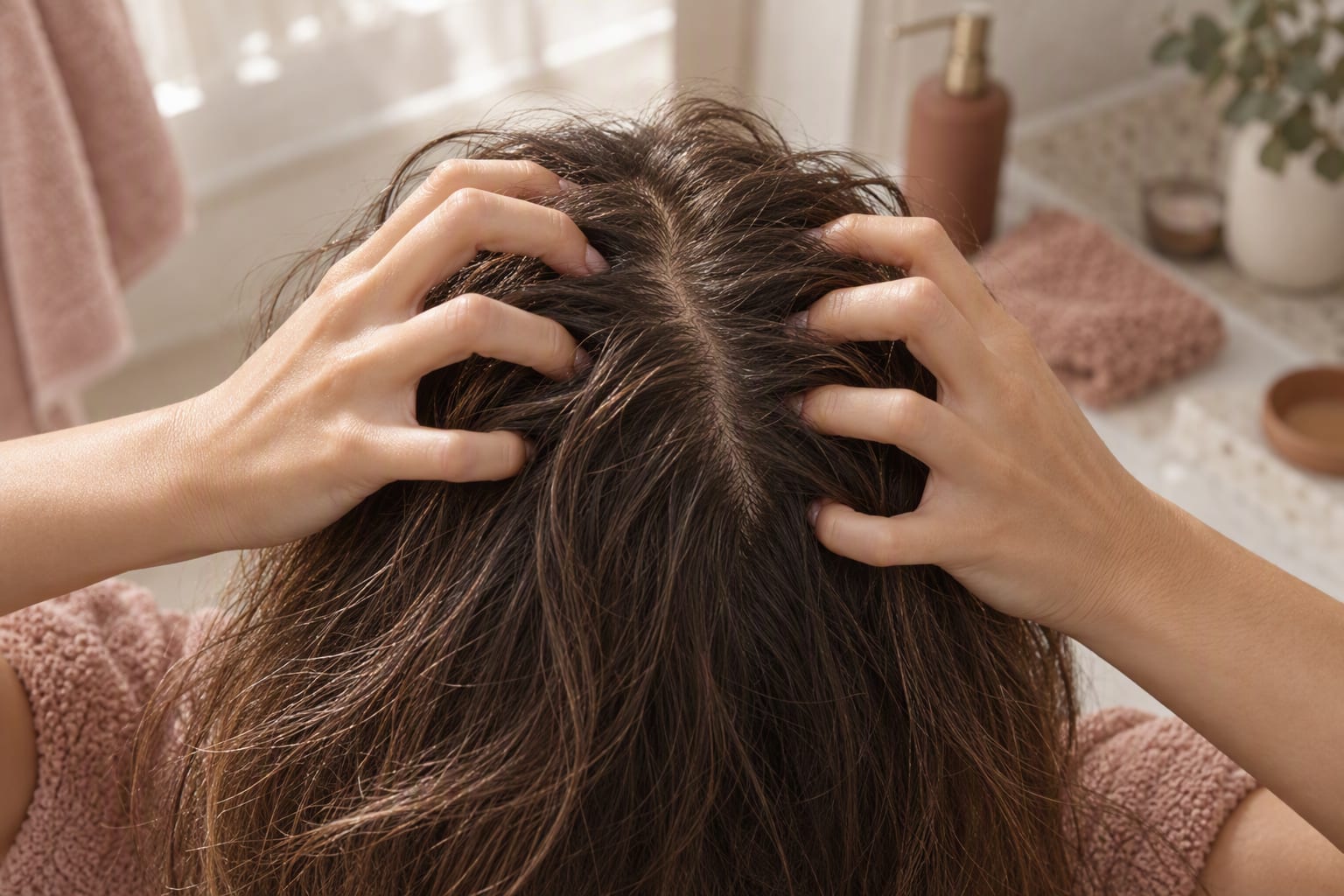
Scalp Care: Treat It Like Skin, Because That Is Exactly What It Is
Flakes and itching are scalp problems, not hair problems. Here is what a sensible scalp routine looks like, and when hair loss needs a doctor rather than a serum.
How to Wash Your Hair Properly, and Why Frequency Matters More Than Shampoo
Washing less often is a decision based on your scalp, not a trend. Here is how often to wash by hair type, why scalp and ends differ, and the mistakes that cause frizz.
Making Fragrance Last Longer Without Reapplying All Day
Perfume fades fastest on dry skin and in hot air. Here is where to apply it, how layering works, why your fragrance disappears, and how storage shortens its life.