Scalp Care: Treat It Like Skin, Because That Is Exactly What It Is
Flakes and itching are scalp problems, not hair problems. Here is what a sensible scalp routine looks like, and when hair loss needs a doctor rather than a serum.
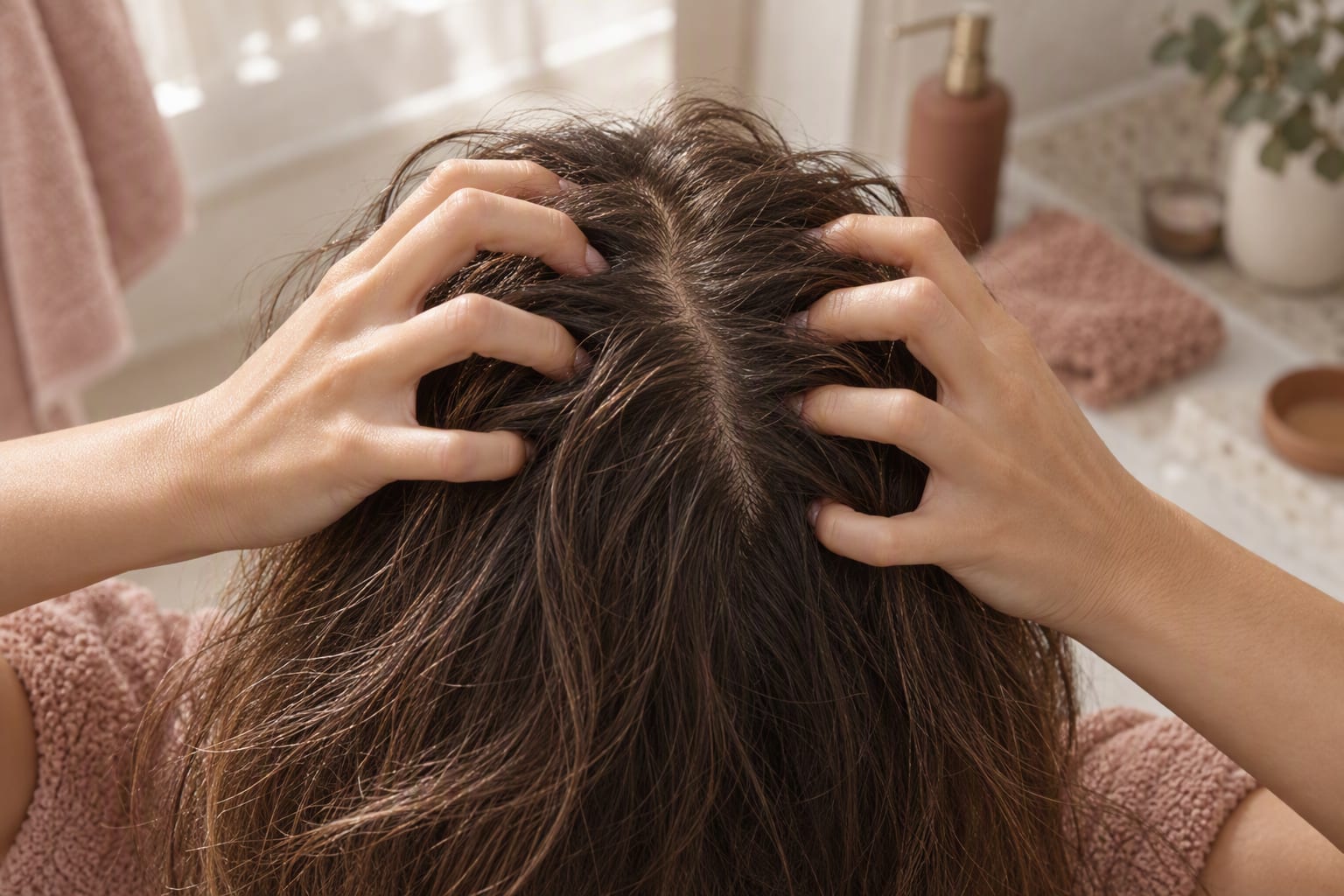
A calm scalp needs gentle cleansing and patience, not a shelf of treatments, and any real hair loss belongs with a doctor before it belongs with a product.
Most people spend years caring for their hair and almost no time thinking about the skin it grows out of. That is backwards. The scalp is skin, and it behaves like the skin on your face: it has oil glands, a microbiome, and a barrier that can be irritated or over-cleaned. When the scalp is unhappy, the hair that grows from it often looks worse for it.
If you have ever had an itchy scalp in winter, flakes on a black sweater, or a tight, dry feeling after washing, the fix is usually a change in routine rather than an expensive treatment.
The scalp is skin, and it needs the same basics
The scalp shares most of its biology with the rest of your skin. It has a barrier that holds in moisture and keeps irritants out, oil glands that vary from person to person, and a community of microorganisms that is usually harmless and occasionally gets out of balance.
That means the principles that work for facial skin mostly work here too.
- Do not over-clean it. Stripping the scalp with harsh washing and hot water can leave it tight, dry, and more reactive.
- Do not under-clean it. Leaving oil, sweat, and product to build up can cause irritation and flaking.
- Be gentle with the barrier. Scratching, harsh tools, and strong fragrances can disrupt it.
Most scalp problems sit at one extreme or the other.
What a healthy scalp routine looks like
You do not need a ten-step scalp regimen. You need a short one you will repeat.
Cleanse regularly but gently
Wash as often as your scalp needs. If it is oily, that may be daily. If it is dry, less often. Use a shampoo that leaves the scalp comfortable rather than squeaky, and keep water warm rather than hot. A sulfate-free shampoo can suit scalps that feel stripped by stronger formulas, though not everyone needs one. Our guide to washing hair properly covers frequency in more detail.
Treat the scalp, not the hair
If you use a scalp serum, apply it to the scalp itself, parting the hair so it reaches the skin. Massage it in with your fingertips. Most serums are designed for the scalp and do nothing useful for the ends, where you want conditioner instead.
Massage without aggression
A few minutes of gentle fingertip massage feels good and helps apply product evenly. It will not dramatically change hair growth on its own, so be skeptical of tools promising a specific number of new hairs.
Protect it from the sun
The scalp is skin, and the part line is one of the most sun-exposed areas on the body. If you part your hair in the same place every day, that strip of skin gets a lot of sun over the years. A hat, or a scalp-friendly sunscreen on exposed partings, is a reasonable habit.
What actually helps common complaints
Flakes are not always the same thing. A dry, tight scalp can flake, and so can an oily one. They look similar and need different handling.
| Complaint | Often helped by | Usually not helped by |
|---|---|---|
| Itchy, flaky scalp | Gentle cleansing, less heat, fewer fragranced products | Scratching, harsh scrubs |
| Buildup and dullness | Regular washing, occasional clarifying | Layering more product on top |
| Dry, tight feeling | Warm not hot water, gentler shampoo | Daily strong shampooing |
| Oily roots within a day | Washing when needed, lighter conditioner | Skipping washes to “train” it |
If flakes are persistent, greasy, and come with itching or redness, that pattern is worth showing to a doctor rather than guessing.
When to see a doctor about hair loss
This is the part most beauty writing skips, and it matters most.
Shedding some hair every day is normal. Hair has a growth cycle, and it is always in transition. What is not normal is a sudden increase in shedding, visible thinning at the part or crown, bald patches, or a scalp that is painful, scaly, or inflamed.
Some hair loss is medical. It can be related to thyroid function, iron levels, hormones, nutritional deficiencies, autoimmune conditions, or a reaction to a medication. None of that can be diagnosed from a product page.
If you are losing hair in a pattern that worries you, see a doctor or dermatologist. They can examine the scalp and order tests if needed. A scalp serum might be a pleasant part of a routine, but it is not a diagnosis, and delaying proper care can matter. If you are considering a hair-loss treatment, talk to a clinician about whether it suits you.
Buying advice: who should spend, who should skip
Worth buying: a shampoo that suits your scalp, and a simple scalp serum if you enjoy the ritual and want to treat the skin directly. These are low-risk and inexpensive to try.
Skip it if: you are hoping a serum will regrow hair you have lost. That is a medical question, not a cosmetic one.
Do not overpay for: devices that promise a fixed increase in hair count, or routines with many steps. The tradeoff is real: a fancy tool can feel productive while the underlying issue goes unaddressed.
The bottom line
Treat your scalp like the skin it is: cleanse gently, do not over-scrub, protect it from the sun, and keep the routine short. For flakes and dryness, patience usually does more than products. For genuine hair loss, see a doctor before you buy anything.
Products mentioned
- Scalp serum — for applying treatment to the skin rather than the strands.
- Sulfate-free shampoo — a gentler cleanse for scalps that feel tight after washing.
- Hair mask — for the ends, where the scalp routine stops and moisture begins.
More in Hair & Body
View all
How to Wash Your Hair Properly, and Why Frequency Matters More Than Shampoo
Washing less often is a decision based on your scalp, not a trend. Here is how often to wash by hair type, why scalp and ends differ, and the mistakes that cause frizz.
Hair Styling Tools: How Hot Is Too Hot, and How Many Passes Is Too Many
Heat damage builds up quietly, not in one session. Here is what temperature ranges are gentler, how many passes hair can take, and what a heat protectant really does.
Making Fragrance Last Longer Without Reapplying All Day
Perfume fades fastest on dry skin and in hot air. Here is where to apply it, how layering works, why your fragrance disappears, and how storage shortens its life.