Repairing Damaged Hair: What Can Be Fixed and What Has to Be Cut
Hair is not living tissue, so repair means something different than for skin. Here is what protein and moisture do, and when a trim, not a treatment, is the honest answer.
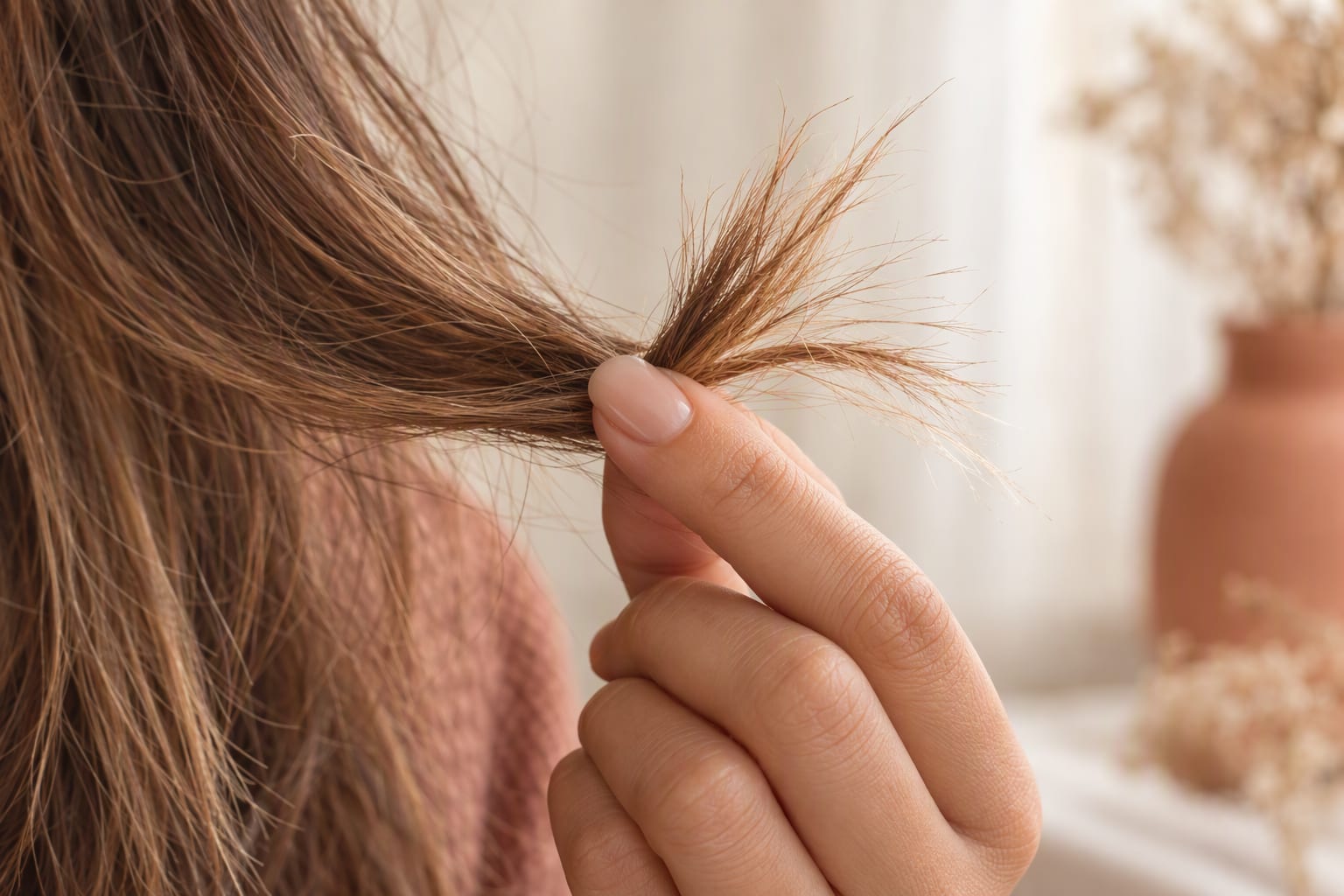
Masks and bond builders can make damaged hair look and feel better, but split ends will never mend, so do not overpay to avoid a trim you actually need.
There is a lot of money spent trying to repair hair that cannot, strictly speaking, be repaired. Hair is not living tissue. It does not heal the way skin does. Once a strand is structurally broken, that break does not knit back together, no matter what a bottle claims.
That does not mean treatments are useless. It means you have to know which problems they solve. Some damage can be made to look and feel dramatically better. Some of it can only be cut off. Understanding the difference saves both money and disappointment.
Why hair damage is different from skin damage
Skin is alive. It has cells that divide and replace damaged ones, so a cut heals because your body rebuilds the tissue.
Hair is not alive once it leaves the follicle. The visible strand is a structure of protein and bonds with no ability to regenerate. It can be conditioned, coated, and protected, and it can hold a new shape temporarily, but it cannot regrow itself.
There are really two kinds of damage:
- Cosmetic damage to the surface and inner structure that changes how hair looks and feels. This can be improved, sometimes a great deal.
- Structural damage such as split ends or breaks, where the fiber is physically severed. This cannot be undone.
Protein versus moisture: the balance, not a competition
The most useful model for damaged hair is a balance between protein and moisture. Both matter, and too much of either causes problems.
Moisture means water and the ingredients that attract and hold it, such as glycerin and certain oils. Moisturized hair feels soft, flexible, and smooth. Hair that lacks moisture feels dry and brittle, and it snaps when stretched.
Protein means ingredients that bind to the hair and temporarily fill in gaps in the structure, often hydrolyzed proteins. Protein-treated hair feels stronger and firmer. Hair that lacks protein can feel limp, mushy, and overly stretchy when wet.
| Sign | What it often suggests | What to reach for |
|---|---|---|
| Dry, rough, snaps when dry | Low moisture | Hydrating mask or conditioner |
| Mushy, limp, stretches when wet | Low protein | A protein-containing treatment |
| Stiff, straw-like, brittle | Too much protein | Ease off protein, add moisture |
| Soft but still tangles | Surface damage | Conditioner plus a trim |
The classic mistake is over-correcting. If your hair feels rough, you add a protein mask, and it feels worse, you likely needed moisture. Alternate them rather than using both every wash, and do not leave a protein mask on for an hour hoping for a better result. More is not better, and over-proteinized hair is annoying to undo.
Bond builders, explained honestly
Bond builders are a category of treatment that claims to reconnect broken bonds inside the hair. The chemistry is real: certain ingredients can form new links between the protein chains, and the published research and manufacturer statements describe measurable changes to the hair’s strength and feel.
What they cannot do is put back what is gone. A bond builder can reinforce hair that still has its structure, but it cannot fuse a split end or rebuild a broken strand. Think of it as scaffolding on a wall that is still standing, not a way to rebuild a wall that has fallen down.
Where bond builders are genuinely useful:
- Hair that has been lightened or chemically treated and feels weak but is not yet breaking.
- Hair that has been over-processed and needs help holding up between trims.
- As a support step before you reduce heat styling.
They are not worth buying for hair that is already snapping and splitting, where the fix is a cut, or as a way to justify continuing high heat.
Split ends and breakage: trim versus treat
A split end is a physical tear in the fiber. Conditioners and serums can temporarily glue it shut and make it look neater, and this is a legitimate cosmetic trick. But the split will reopen, and left alone it can travel up the strand.
The only permanent fix for a split end is to cut above it, because a non-living fiber cannot knit itself back together.
- Dusting removes only the very tips and suits hair with early splits.
- A regular trim every eight to twelve weeks is a common rhythm for hair that is growing out damage.
- Cutting a little more may be needed if splits have traveled far up the strand.
If you are trying to grow your hair long, delaying trims to preserve length usually backfires. Split ends travel upward, and the hair eventually breaks off at a point higher than you would have cut.
Buying advice: who should spend, who should skip
Worth buying: a good moisturizing mask, a conditioner that suits your hair, and a heat protectant you will actually use. For color-treated hair, a bond builder is a reasonable addition.
Skip it if: your main complaint is split ends. No product will fix them, and buying one instead of booking a trim is the tradeoff you should avoid.
Do not overpay for: shampoos that claim to repair damage. They rinse off before they can do much. Spend on leave-in treatments and masks, and on the trim. See our guide to washing hair properly for where these products fit.
The bottom line
Treatments can make damaged hair feel and look better, and for weak, over-processed hair a mask or bond builder is genuinely useful. But split ends and breaks are permanent, and the honest answer is a pair of scissors.
Products mentioned
- Hair mask — a weekly treatment for the mid-lengths and ends.
- Hydrating conditioner — the everyday moisture step after washing.
- Heat protectant — the layer that helps stop new damage forming.


More in Hair & Body
View all
Scalp Care: Treat It Like Skin, Because That Is Exactly What It Is
Flakes and itching are scalp problems, not hair problems. Here is what a sensible scalp routine looks like, and when hair loss needs a doctor rather than a serum.

How to Wash Your Hair Properly, and Why Frequency Matters More Than Shampoo
Washing less often is a decision based on your scalp, not a trend. Here is how often to wash by hair type, why scalp and ends differ, and the mistakes that cause frizz.
Hair Styling Tools: How Hot Is Too Hot, and How Many Passes Is Too Many
Heat damage builds up quietly, not in one session. Here is what temperature ranges are gentler, how many passes hair can take, and what a heat protectant really does.