How to Find Your Foundation Shade Without Wasting Money
Depth and undertone are two different things. How to test foundation in daylight, read your own undertone, and fix a shade that sits between two bottles.
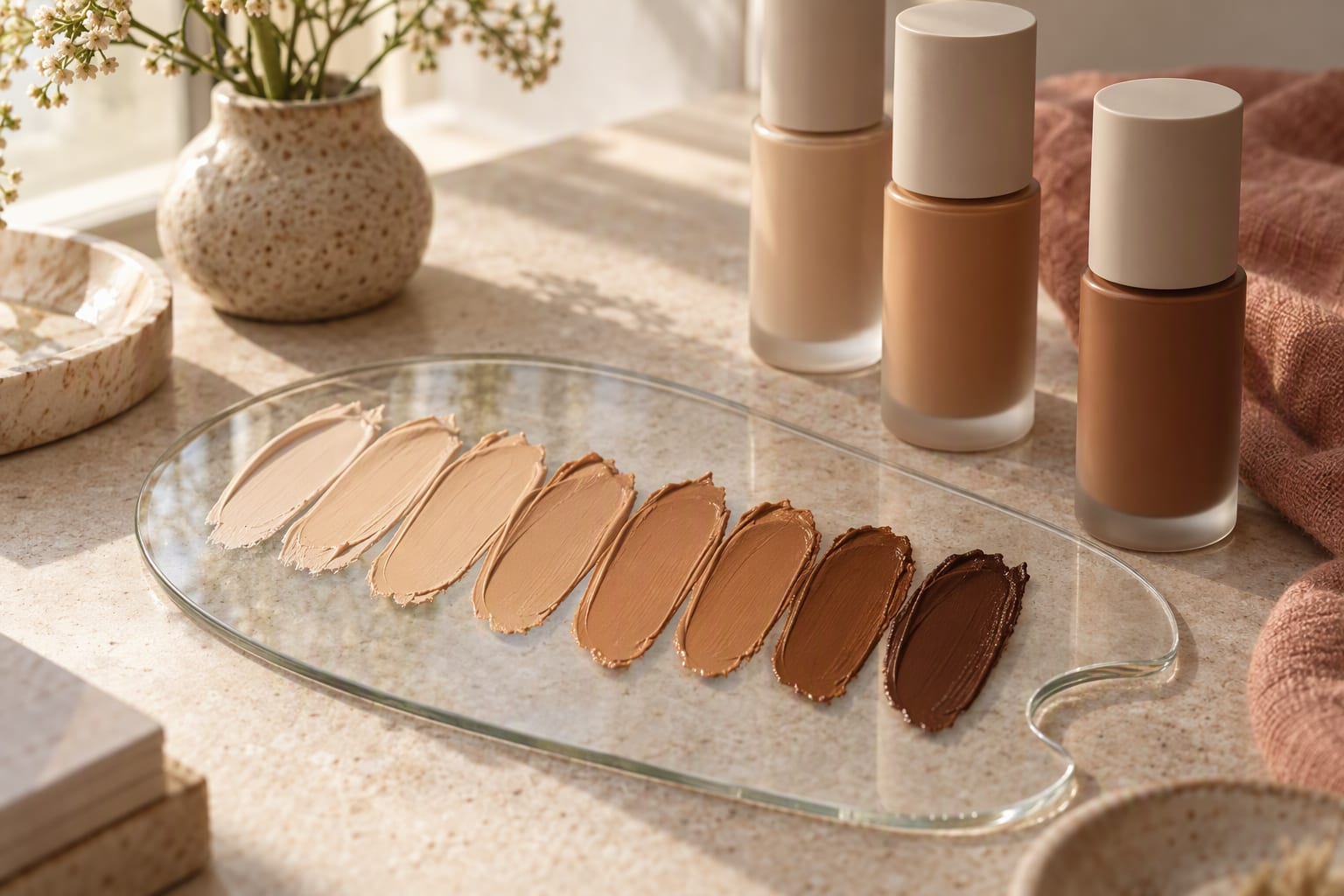
Match depth and undertone together and test in daylight; skip it if you are buying by brand name alone, because the label tells you nothing about the match.
Most foundation mistakes are made in a shop, under lights that were never designed to show you your own face. You match a shade on the back of your hand, buy it, wear it to work, and notice at lunch that your jaw looks gray while your neck looks yellow. The product is not the problem. The way you chose it is.
Finding a shade is not about memorizing a number. It is about separating two things that are always tangled together: depth and undertone. Get those two straight and the wall of bottles stops being intimidating.
Depth and undertone are not the same thing
Depth is how light or deep a shade is. Undertone is the color underneath, which does not change much whether you are fair or deep. A fair olive and a deep warm shade differ in depth, but each can still belong to a family of undertone.
Depth
Depth runs from fair through light, medium, tan, deep, and rich, and brands slice it differently. That is why a “medium” in one line is a “light-medium” in another. Ignore the names and compare the actual color against your skin.
Undertone
Undertone is usually described as cool, warm, neutral, or olive.
- Cool undertones lean pink, red, or blue.
- Warm undertones lean yellow, peach, or gold.
- Neutral sits between the two.
- Olive has a green or gray cast, and many lines skip it, which is why olive skin is often the hardest to match.
A quick way to read your own undertone is to look at the veins on your inner wrist in daylight. Bluish veins often point cool, greenish veins often point warm, and a mix often points neutral. Treat this as a rough guide, because vein color is affected by how deep your skin is. The more reliable test is comparison: hold a warm and a cool version of the same depth against your jaw and see which one disappears into your skin.
Test in daylight, not in the shop
Store lighting is warm and flattering and almost useless for matching. So is the mirror angle, which usually lights you from above and casts shadows that change how a shade reads.
- Swatch on the jawline or the side of the face, not the hand. Your hand is usually a different depth and undertone than your face.
- Step outside with the swatch on, or stand near a window. Daylight is the reference most of your day is spent in.
- Check three points: the jaw, the neck, and the edge where foundation meets bare skin. The right shade blends at all three.
- Let it sit for a few minutes. Some formulas oxidize, meaning they darken slightly as they settle on the skin.
Do not judge by a photo. Phone cameras adjust white balance, and they can turn a good match into a bad one on screen.
What to do when you are between shades
Almost everyone lands between two shades at some point.
- Buy the two closest and mix. If you sit consistently between a light and a medium, mixing gives a truer match than forcing either one alone.
- Go slightly warmer rather than lighter. A shade a touch too warm reads as healthy, while one that is too light reads as a mask, especially along the jaw.
- Use a lighter concealer at the center of the face. This handles a small depth difference without a second foundation.
- Adjust toward the neck, not the face. Foundation should sit between face and neck so the transition is invisible.
| Situation | Better move | Why |
|---|---|---|
| Between two depths | Mix the two | Truest match, one bottle each |
| Slightly too dark | Lighter concealer at the center | Brightens without a second base |
| Reads too pink | Try a warmer or neutral shade | Removes the gray cast |
| Darkens through the day | Go one shade lighter or warmer | Offsets oxidation |
Who should buy what, and what not to overpay for
A good foundation is worth the price if it matches and wears well on your skin. But do not assume price equals match. A wide shade range matters more than a luxury label, and some of the broadest ranges are not the most expensive.
- Buy a formula built for your skin type. The manufacturer states the finish and coverage, so a hydrating base suits dry skin and an oil-free or long-wear base suits oily skin.
- Skip a full-coverage formula if you want a natural look on an ordinary day. Buildable medium coverage suits more mornings.
- Do not overpay for a sponge or applicator. A basic damp sponge blends almost any formula, and our makeup section covers the tools worth owning.
One honest note: matching depends on your skin that day, not only on the bottle. If you buy online, look for a brand with a generous return policy and a shade finder that asks about undertone rather than only about a selfie. If you have a lot of redness or an uneven tone, a color-correcting step before foundation can do more than a different shade, and our skincare section covers how that fits.
The bottom line
Buy foundation by depth and undertone together, test it in daylight on your jaw, and mix two shades if you sit between them. Skip the idea that a famous name guarantees a match, and do not overpay for the applicator. The right bottle is the one that disappears at your neck, and you only find that outside the shop.


More in Makeup
View all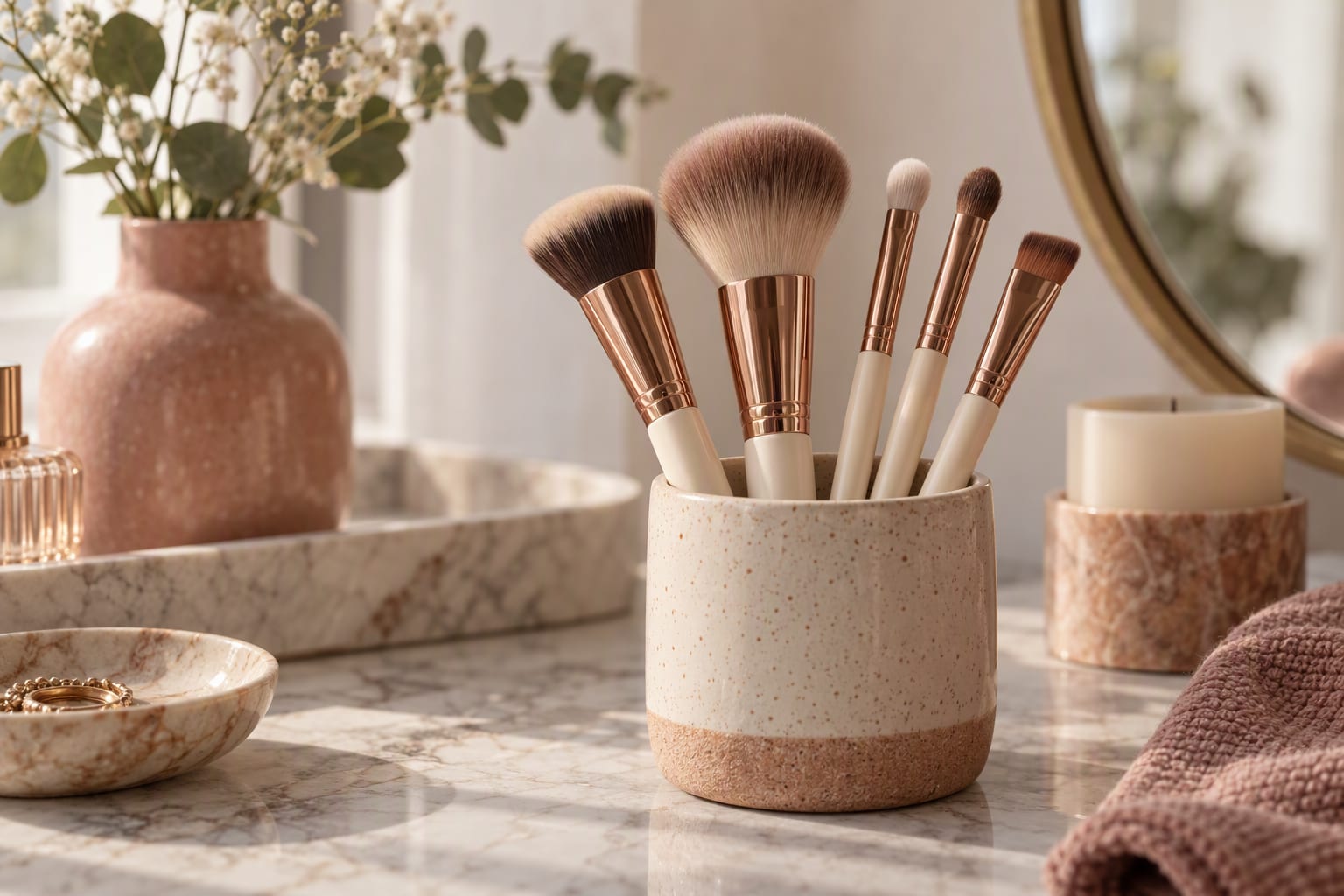
The Five Makeup Brushes You Actually Need
Five brushes cover almost every routine, and the other twenty just add clutter. A practical guide to the shapes that matter, plus how to wash them so they last.
How to Make Your Makeup Last Through a Long Day
Long wear is a method, not a product. How to prep, layer, and set makeup so it survives a commute, an office day, and an evening you did not plan for.
How to Choose Lip Color That Actually Suits You
The tube looked different on you for a reason. How undertone and finish decide lip color, why a swatch on your hand misleads, and how to test a shade that works.