How to Choose Lip Color That Actually Suits You
The tube looked different on you for a reason. How undertone and finish decide lip color, why a swatch on your hand misleads, and how to test a shade that works.
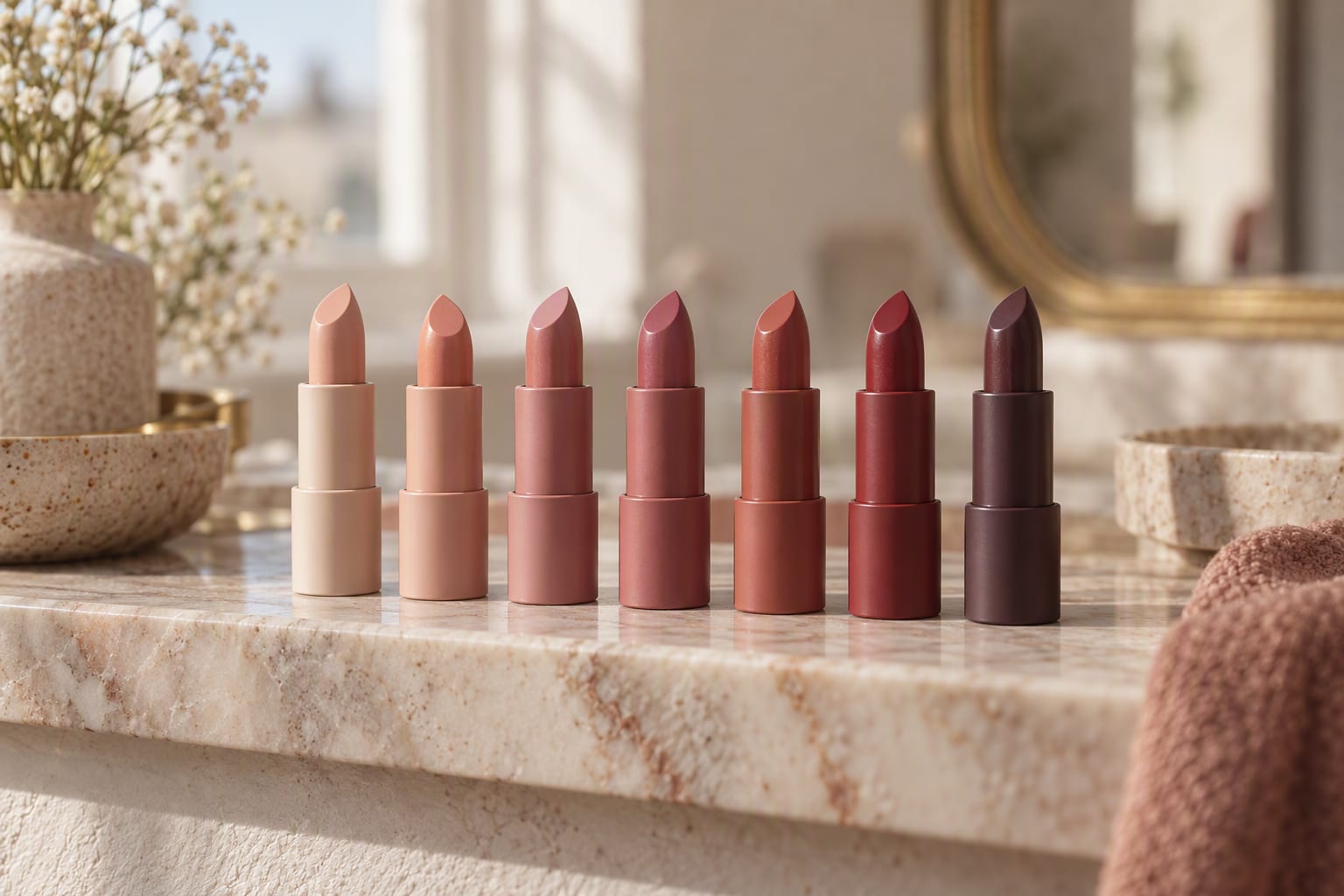
Choose lip color by undertone and test it on your lips in daylight; skip the hand swatch, because it will mislead you every time.
Lip color is the purchase people regret most, and the reason is almost always the same: the shade looked different in the shop. A berry that flattered your friend turned brown on you. A nude that looked peachy in the tube turned gray. The color did not change. The context did, and the biggest part of that context is your undertone.
Choosing a lip color is not about finding one universally flattering shade. It is about understanding two things: the undertone of the color and the undertone of your skin. Match those and the shade works.
Undertone decides more than the shade name
Shade names are marketing. “Rosewood,” “mauve,” and “nude” mean different things in different lines, and none of them tells you what the color will do on your face.
What matters is whether a color is cool, warm, or neutral, and whether it is muted or bright.
- Cool colors lean blue, purple, or pink. Think true reds, berries, plums, and cool pinks.
- Warm colors lean orange, brown, or gold. Think brick, terracotta, coral, and warm nudes.
- Neutral colors sit in between and flatter most undertones.
- Muted colors are softened with gray or brown, which makes them calmer. Bright colors are saturated and make a statement.
A cool-toned person wearing a very warm orange lip can look sallow, and a warm-toned person wearing a cool blue-pink can look gray. The fix is not a different depth. It is a different undertone.
Why the hand swatch lies
Swatching on the back of the hand is the most common mistake, and it fails for three reasons.
- The hand is a different color than the lips. Lips often have their own natural pigment, which can be pinker, browner, or more purple than the rest of your skin. A color that looks neutral on the hand can pull brown or purple on the lips.
- The lighting is wrong. Shop light is warm, which flatters warm colors and dulls cool ones. It also makes everything look more muted than it is.
- The hand has no natural lip color underneath. A lipstick is semi-transparent, so the color you see is the lipstick over your lips. Over the hand, you are seeing it over a different base.
If you must swatch in a shop, use the fingertip, which is closer in tone to the lips than the back of the hand, then step into daylight. Even then, treat it as a rough guide.
The better test
- Test on the lips, not the hand. Most counters allow this with a disposable applicator, and it is the only way to see the true color.
- Check it in daylight. Step outside or near a window before you decide.
Finishes and what each does
| Finish | Look | Best for | Wear |
|---|---|---|---|
| Matte | Flat, opaque | Strong color, long wear | Longest, can be drying |
| Satin | Soft sheen | Everyday, comfortable | Moderate |
| Gloss | Shiny, sheer to medium | Plump look, easy color | Shorter, can transfer |
| Sheer or balm | Soft tint | Natural days, dry lips | Shortest |
Matte gives the most color payoff and lasts the longest, but it can be drying, so a balm underneath helps. Satin is the easiest everyday finish. Gloss is forgiving on dry lips and easy to apply without a mirror, but it transfers. A sheer tinted balm is the lowest-effort option and the best choice for a natural look or a dry-lip day.
Choosing for your undertone and depth
- Cool undertones: true reds, berries, plums, cool pinks, and blue-based nudes.
- Warm undertones: brick, terracotta, coral, warm browns, and peachy nudes.
- Neutral undertones: most colors work, so start with a neutral rose or a balanced red.
- Deep skin: deeper, richer colors often read as a natural flush, while pale nudes can look ashy. Berry, wine, and deep brown-reds are especially strong.
- Fair skin: both soft and bold colors work, though very pale nudes can wash out the face, so a little warmth helps.
None of these are rules. They are starting points, and the only test that matters is how the color looks on your face in daylight.
Who should buy what, and what not to overpay for
- Buy one everyday shade in a satin or balm finish, and one stronger shade for evenings. Two well-chosen colors cover most weeks.
- Buy a tinted balm if your lips are often dry or you want an easy, no-mirror application.
- Skip buying a full range at once. Lip color is the most personal category in makeup, and a set rarely fits.
- Do not overpay for a basic everyday shade. The formula and the undertone matter far more than the brand, and many affordable options perform well.
Two practical notes. A dab of concealer blended just outside the lip line sharpens the edge of a bold color without changing the shape. And dry lips make every finish look worse, so take lip color off at night with a gentle cleanser or a balm before you blame the lipstick. Our skincare section covers basic lip and barrier care, and our makeup section covers how lip color fits with the rest of the face.
The bottom line
Buy lip color by undertone rather than by shade name, test it on your lips in daylight, and skip the hand swatch. Skip the full set, and do not overpay for an everyday shade. The tradeoff is between wear and comfort, and a satin finish is usually the sweet spot.
More in Makeup
View all
The Five Makeup Brushes You Actually Need
Five brushes cover almost every routine, and the other twenty just add clutter. A practical guide to the shapes that matter, plus how to wash them so they last.
How to Make Your Makeup Last Through a Long Day
Long wear is a method, not a product. How to prep, layer, and set makeup so it survives a commute, an office day, and an evening you did not plan for.
How to Find Your Foundation Shade Without Wasting Money
Depth and undertone are two different things. How to test foundation in daylight, read your own undertone, and fix a shade that sits between two bottles.