Gua Sha and Facial Rollers: Technique Beats the Tool
A jade roller will not build collagen and a gua sha stone will not lift your face. What they do well is de-puff, and technique matters far more than the price.
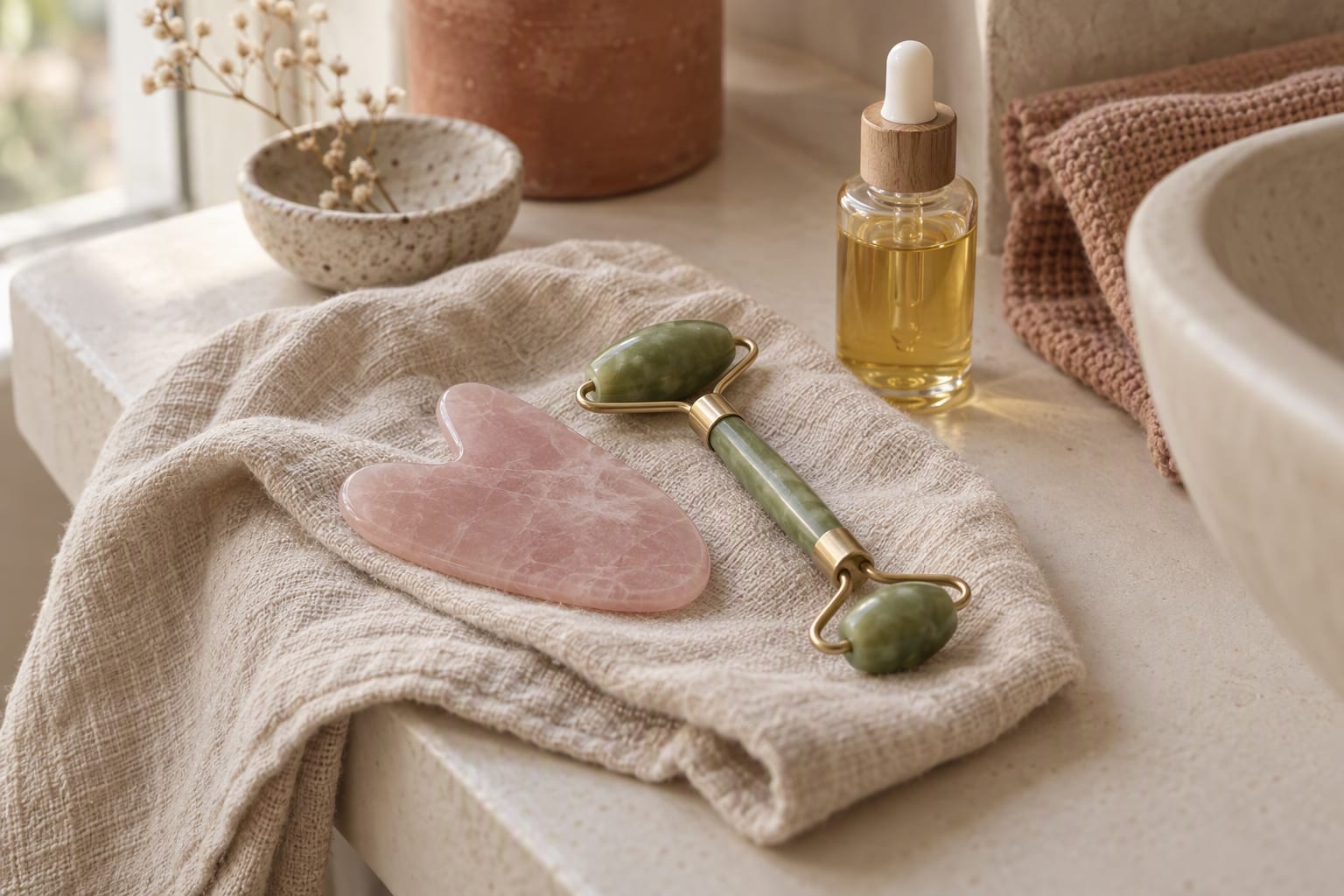
Buy a cheap gua sha and an ice roller for de-puffing, ignore the collagen claims, and let technique do the work.
There is a version of the gua sha story that promises sculpted cheekbones and rebuilt collagen. There is also a version that is true. The honest one is smaller and still useful: these tools move fluid, they feel good, and they can take down morning puffiness. They will not change the structure of your face.
If you already own one, or you are deciding whether the stone on your feed is worth it, the useful question is not which tool is best. It is whether your technique is doing anything at all.
What these tools actually do
A gua sha stone and a facial roller are both massage tools. That is the whole category. They apply pressure and motion to the skin and the tissue just under it.
The effect people notice most is on fluid. The face holds lymph, and it pools overnight and when you are tired or salty. Gentle, directed strokes encourage that fluid to move toward the drainage points near the ears and the collarbone. The result is a face that looks less puffy, often within minutes. It is temporary, and it is real.
What they do not do is build collagen, and no amount of pressing will firm the muscle underneath. Claims about “boosting collagen” from a stone belong in the same bin as claims that a roller “detoxes” you. Skin is not a sponge, and a tool cannot change its structure by gliding over it.
Lymphatic drainage versus collagen claims
The confusion is understandable, because both effects get described in the same soft language.
| Claim you will read | What is reasonable | What is not |
|---|---|---|
| Reduces puffiness | Yes, temporarily, by moving fluid | Permanent slimming |
| Helps drain lymph | Yes, gentle strokes support flow | Detoxing the body |
| Boosts collagen | No evidence a stone does this | Any firming or lifting claim |
| Improves product absorption | Marginally, via light massage | Making a serum work deeper |
The lymphatic system is real, and massage does support its flow. The word detox, however, is marketing. Your liver and kidneys handle that, and a roller does not.
Technique: the part nobody teaches
Most people press too hard and move too fast, and both are mistakes. The tools work on light, slow, directional pressure.
A workable method:
- Start with slip. A few drops of a hydrating serum or a light facial oil gives the stone something to glide on. Never drag a stone over dry skin.
- Angle the edge, do not scrape it. The gua sha edge should sit nearly flat against the skin, at a shallow angle, so it sweeps rather than digs.
- Work from the center outward and downward. Cheek toward the ear, jaw toward the ear, forehead outward, then down the neck toward the collarbone.
- Keep it light. If your skin is turning red or you feel a scraping sensation, you are pressing too hard.
- Repeat each stroke a handful of times. Ten to fifteen seconds per area is plenty. This is a two-minute ritual, not a ten-minute project.
The roller works on the same principle. Roll outward and downward, use the small end around the eyes, and store it cold if you want the extra de-puffing effect.
The morning-after routine
Picture the morning after a late night, a salty dinner, or a long flight. Your face is holding water and your usual routine is not going to fix that.
This is where these tools earn their place. Five minutes before you get dressed:
- Cleanse and pat dry.
- Apply a few drops of serum or oil.
- Gua sha from the center of the face outward, then down the neck.
- Finish with a cold roller or an ice roller around the eyes and jaw.
- Continue with moisturizer and sunscreen as usual.
It will not last all day, and it will not do anything your body would not eventually do on its own. But for a wedding morning or a day when you want to look less tired, it is a reasonable five minutes.
Who benefits, who should be careful
Benefits most: people who wake up puffy, people who travel or eat late, and anyone who finds facial massage genuinely relaxing. If you enjoy the ritual, you will use it, and that is what makes any tool worth owning.
Should be careful: anyone with active acne, rosacea, eczema, or broken skin in the area. Massage can aggravate inflamed skin. If you have a skin condition or a recent procedure, ask a dermatologist before adding friction to your routine.
Should skip: anyone hoping for a structural change. If you want firmer skin, a stone is the wrong tool, and the firming device category is the more honest conversation.
The bottom line
Buy a gua sha stone and, if you like cold, an ice roller. They are the cheapest useful tools in the category, and their job is de-puffing and relaxation, not firming. Ignore the collagen claims, learn a light technique, and use it on the mornings it helps. The tool is not the expensive part, and it never was.

More in Devices & Tools
View all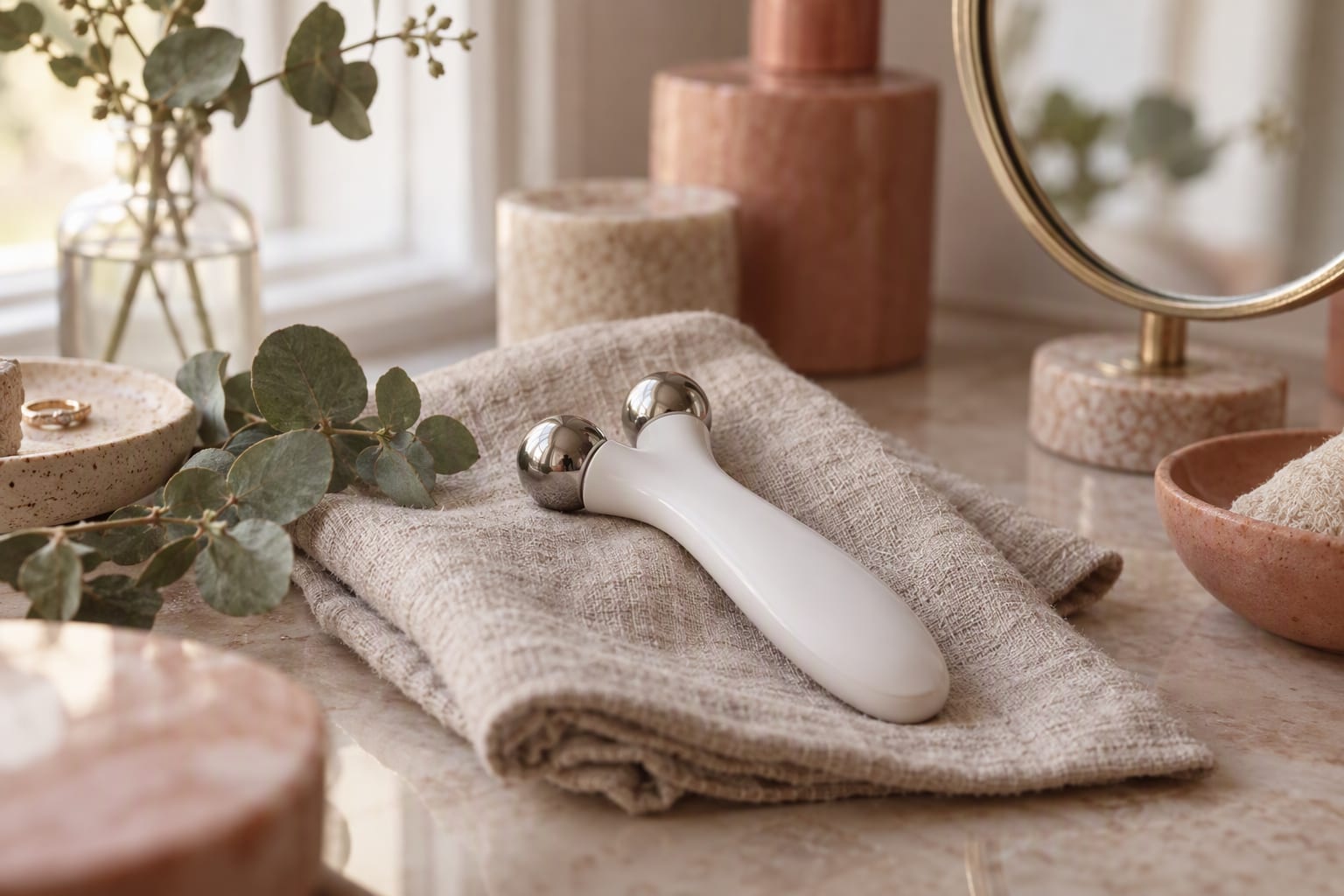
Microcurrent Devices Explained: What the Current Actually Does
Microcurrent tools promise a lifted look without needles. Here is what the published research suggests, why the results fade, and who should leave them on the shelf.
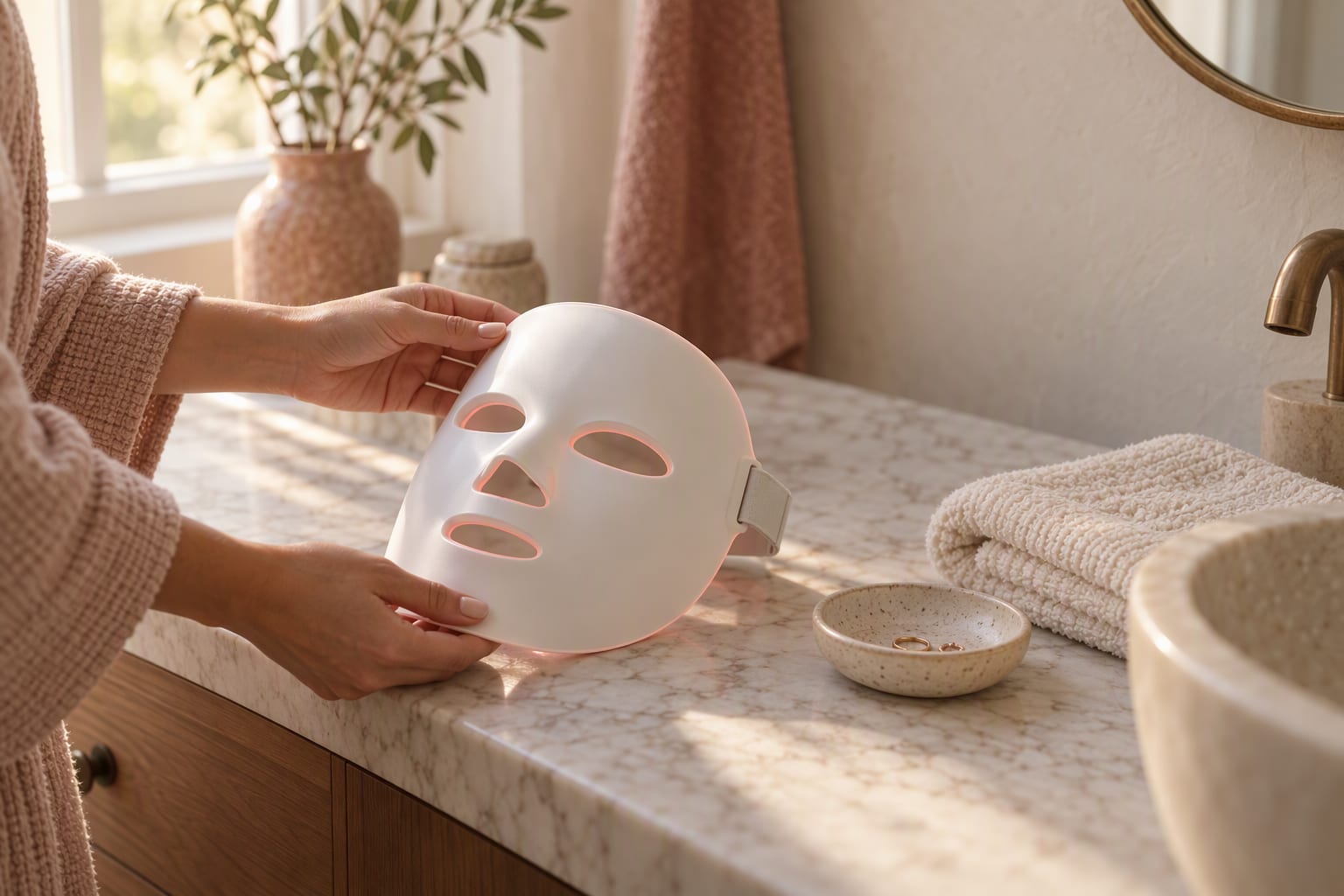
LED Light Therapy Masks: What They Actually Do (and What They Don't)
Red and blue light masks are everywhere. Here's what the published research supports, what it doesn't, and how to decide whether one deserves a place on your shelf.
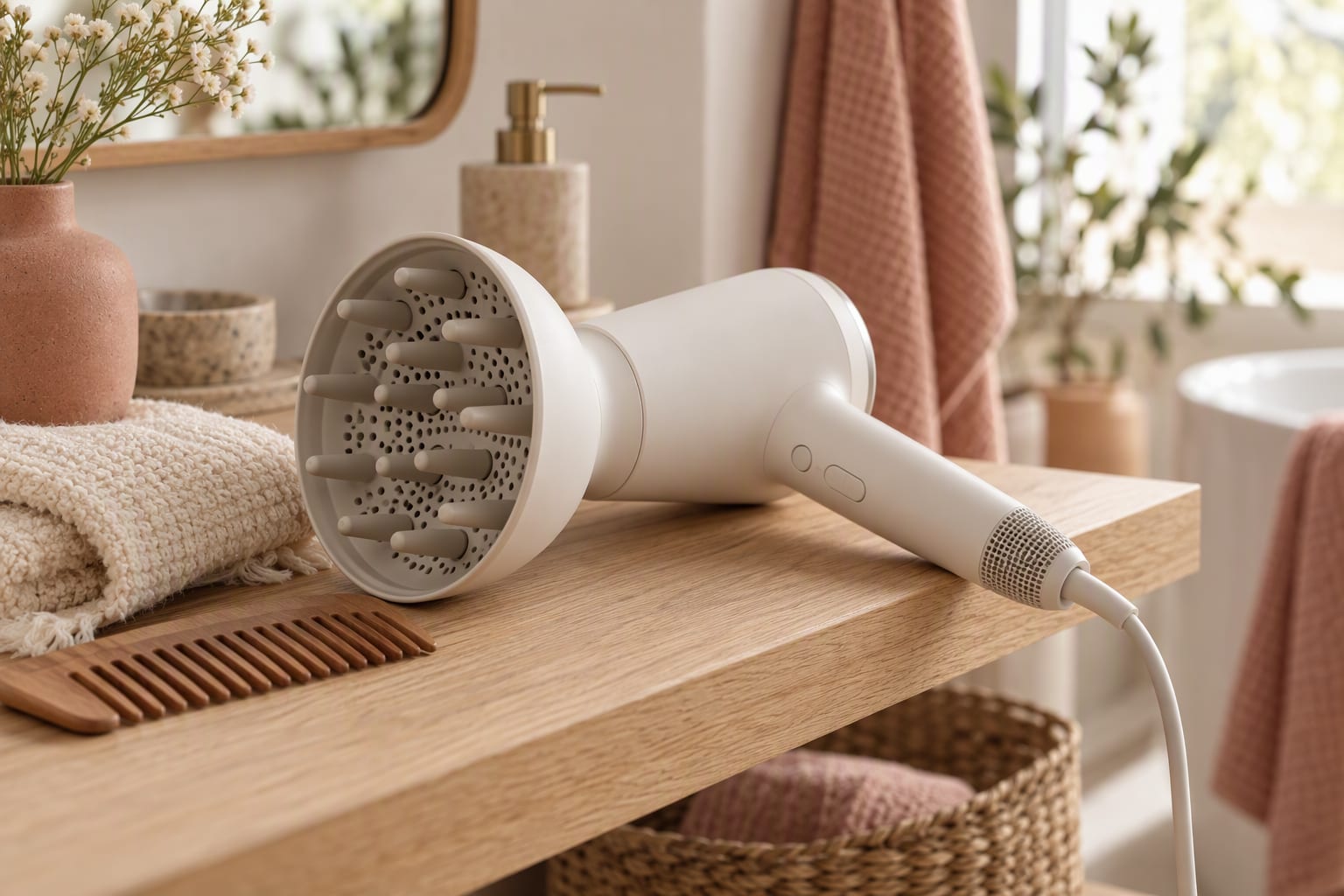
How to Choose a Hair Dryer Without Paying for Marketing
Heat and airflow matter more than ion claims and app features. Here is what actually protects hair, what to pay for, and what you can safely ignore.